Does Google index Reddit comments? What actually counts
Reddit's robots.txt disallows every crawler, yet Google shows Reddit with full descriptions. Here is what is actually indexed, measured rather than assumed.
Citon25 min read
Short answer
Does Google index Reddit comments?
Not as pages of their own. The indexable unit on Reddit is the THREAD, and comments are indexed only as text that appears on it. A comment permalink points its canonical at the parent thread, and on Reddit's own long-standing markup it additionally carries a noindex, so it is doubly excluded from ranking as a separate URL. There is a harder limit before that: only the comments present in the initial HTML can be read as text at all. On a real 505-comment thread we checked, 25 comments were in the served markup and the rest sat behind lazy-loaded fetches, which is 4.95%. And the reason Google can read any of it is not ordinary crawling. Reddit's public robots.txt disallows every user agent, and Google's access runs through a licensing arrangement instead, which is why other search engines lost Reddit results in 2024 and Google did not.
Google does index Reddit comments, but only as text sitting on a thread page, and never as pages of their own. That distinction decides almost everything else, and the fastest way to see why is to open a new tab and fetch https://www.reddit.com/robots.txt. It is 538 bytes. Strip the four comment lines and what is left is two lines:
User-agent: *
Disallow: /
There is no Allow line. There is no Googlebot section. Every crawler on the internet is told, in the file that exists to say this, to stay off the entire site.
Now search Google for almost anything with a buying decision in it and count the Reddit threads. Not bare URLs with no snippet. Full results, with titles and descriptions and dates.
Those two observations do not fit together, and the way they fail to fit is the most useful thing anybody can tell you about Reddit visibility. Google publishes the rule that makes it a contradiction rather than a curiosity. A URL blocked in robots.txt can still be indexed if other pages link to it, because Google can index a URL without visiting the page. But then, in Google's own words, the search result has no description. Reddit's results have descriptions.
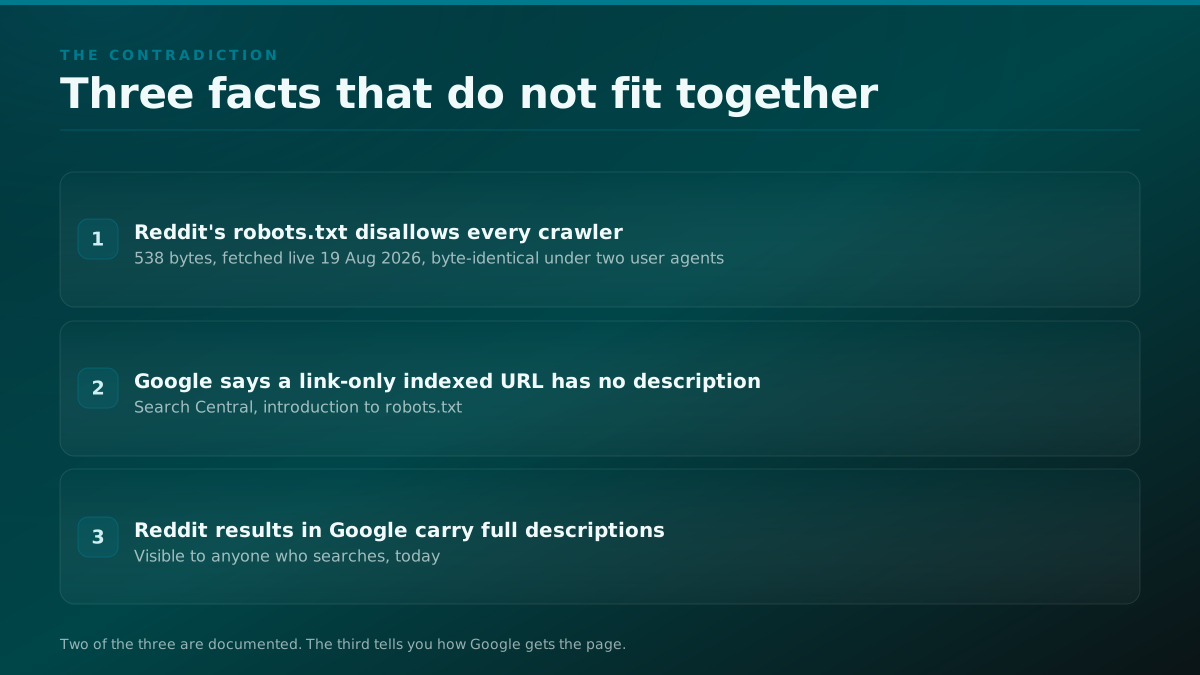
So Google is not reading the file you just read. Something else is happening, and until you know what it is, every downstream question about Reddit visibility is being answered on a broken model.
At a glance
What is and is not an indexable unit on Reddit
| Object | Status |
|---|---|
| The thread page | Indexable. This is the unit that ranks, and the only one of the four that does. |
| A comment shown on the thread page | Indexed as text ON that page. It is content of the thread, not a page of its own. |
| A comment permalink URL | Not a rankable page. Its canonical points at the parent thread, and Reddit's long-standing markup adds a noindex on top. |
| A comment behind "load more" | Not readable as text at all in the initial HTML. On the thread we measured, that was 480 of 505 comments. |
| old.reddit.com versions of any of the above | Self-deprecating. Every old.reddit page we checked declares the www slug form as its canonical. |
We work next door to this question. Our practice is answer engine optimization measured against a held-out control, and we have published two posts arguing about what happens to Reddit threads once an AI assistant can see them. This one is the layer underneath both. Before a thread can be cited, retrieved, ranked or argued about, something has to be able to read it, and the reading step turns out to be where most of the interesting constraints live.
Reddit's public robots.txt disallows every crawler. Google says a URL it has not fetched can still be indexed from links, but that the result carries no description. Reddit results in Google have descriptions. Two of those three statements are documented, so the third is telling you something about how Google gets the page.
Rate limiting for production APIs
competitor.example › blog
roundup.example › guides
What Reddit's robots.txt actually says today
We fetched it live on 19 August 2026 rather than quoting a screenshot. HTTP 200, 538 bytes, and the two directives above. To make sure the file was not varying by client, we fetched it twice under different user agents and hashed both bodies: identical, sha256 prefix 41aea42110242175. To make sure a 200 from that host meant anything at all, we requested a path that does not exist and got a 403 rather than another 200.
old.reddit.com/robots.txt is the same instruction in 27 bytes.
It is worth being precise about what that file is even for, because half the arguments about it are arguments about the wrong control.
From the field
What robots.txt is actually for
A robots.txt file tells search engine crawlers which URLs the crawler can access on your site. This is used mainly to avoid overloading your site with requests; it is not a mechanism for keeping a web page out of Google.
A robots file is a crawl-rate instrument. It manages load. It is not, and Google says plainly that it is not, a way to keep something out of the index. Hold onto that, because in a few sections it produces the single most inverted fact in this whole subject.
The comments in the file point at Reddit's Public Content Policy and at its researcher programme, which tells you the intent: this is a commercial position, not a technical accident. Reddit changed this file in June 2024, and 9to5Google reported at the time that Reddit attributed it to an increase in commercial entities scraping the site, and that it applied to all crawlers unwilling to commit to not using Reddit data for AI training.
The consequences were immediate and are still visible.
Which search engines kept Reddit results after June 2024
| Engine | Reddit results after the change | Route |
|---|---|---|
| Retained | Licensing arrangement, not ordinary crawling | |
| Bing | Lost | Blocked by the public robots file |
| DuckDuckGo | Lost | Sources its index from Bing |
| Mojeek | Lost | Independent crawler, blocked |
| Qwant | Lost | Independent crawler, blocked |
| Kagi | Retained | Buys index data from Google |
Look at the right-hand column rather than the middle one. Every engine that still shows you Reddit does so through Google. Not one of them does it by crawling Reddit. That is not a search-quality outcome, it is a licensing outcome, and it means the question "is this Reddit thread indexed" has a different answer depending on which index you mean.
Why Google is the exception, and what the exception actually is
Google's access runs through the February 2024 licensing agreement, widely reported at around sixty million dollars a year. The scope matters more than the number. What Google bought was continuous access to Reddit's data API plus quarterly bulk transfers of Reddit data. That is a supply arrangement. It is not ordinary web crawling, and it is not a promise to rank or cite anything.
There is also a technical half, and it is the one almost nobody mentions. Reddit does not serve the same robots.txt to Google that it served you. MERJ investigated this with the right instrument: because Reddit verifies Google's IP ranges and blocks agents that merely claim to be Googlebot, they retrieved the file through Google's own Rich Results testing tool, which fetches from Google infrastructure. Their conclusion is that Reddit serves an entirely different robots.txt to Google.
We want to be careful about what that does and does not establish. It establishes that a divergent file exists. It does not publish the exact rules Googlebot receives, and we are not going to invent them. The honest statement is narrower and still decisive: what Reddit serves you is not what Reddit serves Google, so any conclusion you draw by fetching Reddit yourself is a conclusion about the crawler-facing variant.
The four things people mean by "indexed on Reddit"
Here is the sentence that dissolves most of the confusion in this whole subject. The question "does Google index Reddit comments" contains four separate objects wearing one coat, and each of the four has a different and individually simple answer. Naming them apart is most of the work, and once they are apart the arguments people have about this stop being arguments.
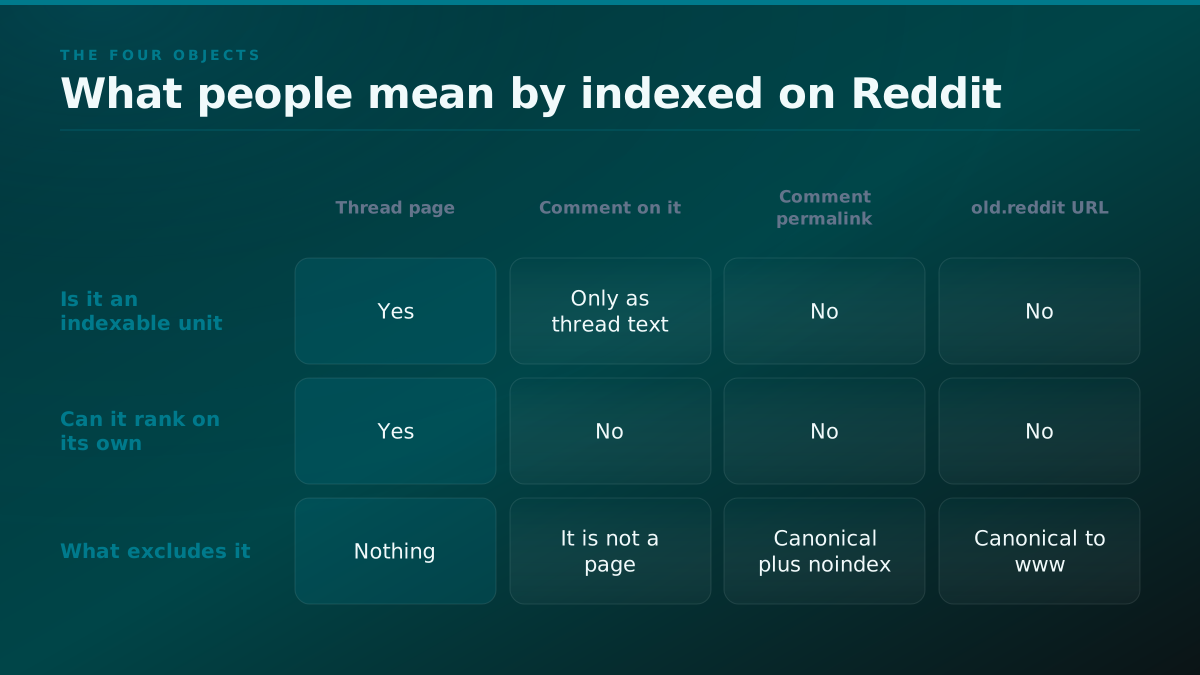
The thread page. reddit.com/r/<sub>/comments/<id>/<slug>/. This is the indexable unit. It is the thing that appears in results, the thing that ranks, and the thing whose title Google matches against a query.
A comment rendered on that page. It is indexed the way any text on a page is indexed: as content of that page. It can absolutely be why the page ranks. It is not a separate result.
The comment permalink. .../comments/<id>/comment/<commentid>/. This is where the naive model breaks. It is a real URL that loads a real page, and it is excluded from being its own indexed result by two independent mechanisms, which we will get to.
The hostname. old.reddit.com and www.reddit.com serve the same thread at two addresses. People argue about which one Google prefers. Google's own canonicalization guidance ranks redirects and rel=canonical as a strong signal, sitemap inclusion as a weak one. old.reddit.com's declared canonical is the strong kind. The markup already answers it.
The question "does Google index Reddit comments" contains four different questions wearing one coat. Answer them separately and the confusion goes away, along with most of the advice built on it.
Watch what happens when you keep these separate. "Do comments get indexed" becomes "yes, as text on the thread". "Should I try to rank my comment" becomes "there is no page there to rank". "Which hostname should I link" becomes a canonical question with a documented answer. Three arguments, three answers, none of which are in dispute once the objects are named.
Every page currently ranking for this question collapses at least two of these together. So does the thread ranking first for it, where one practitioner argues comments are not indexed, the original poster argues they are, a third answers with subreddit subscriber counts, and a fourth answers with the licensing deal. All four are talking about different objects, which is why the thread never resolves.
Which comments are readable at all
Before you ask whether Google indexes a comment, ask a cheaper question first: is the comment in the document at all? A crawler cannot index text that was never served to it, and on a large Reddit thread most of the comment tree is not served. This is a measurable property rather than a matter of opinion, so we measured it.
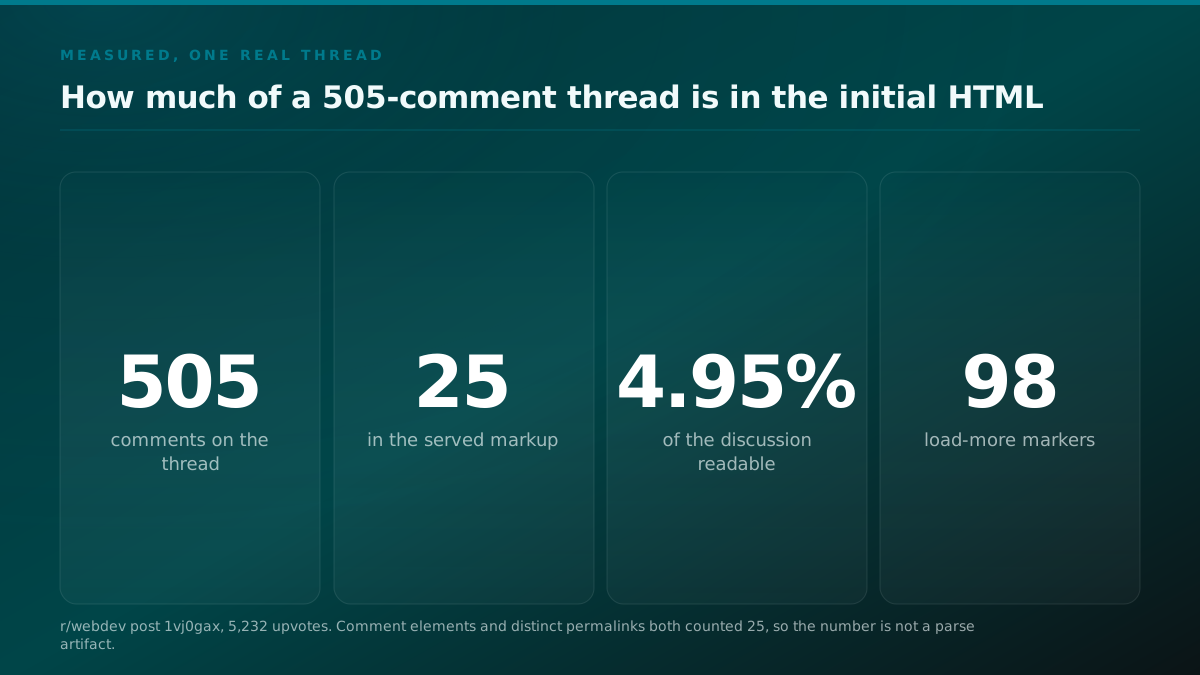
We took one real, current, high-traffic thread and counted. r/webdev post 1vj0gax, "Stack Overflow has gone from a peak of 207k questions in March 2014, down to 1.4k in July 2026". Through our own Reddit data infrastructure the thread carries 5,232 upvotes and 505 comments, confirmed on 19 August 2026.
In the served HTML for that thread:
- comment elements present: 25
- distinct comment permalinks present: 25
- "load more comments" markers: 98
- lazy-load elements pointing at internal fetch endpoints: 109
The first two numbers agree, which is what tells you 25 is a real count and not an artifact of one regex. A negative control on an element name that does not exist returned zero, so the matcher was capable of returning zero and did not.
25 of 505 is 4.95%.
The other 95% sit behind fetches that happen after the initial document, triggered by interaction or by client-side loading. Now put that beside what is known about how the crawler behaves. Googlebot queues pages for rendering, and that queueing is Google's own documented behaviour. What is not documented in writing, but is widely reported by people who have instrumented the crawler directly, is that it starts each page load with local storage cleared, session storage cleared, cookies cleared, and that it declines permission requests. We are citing that as observed behaviour, not as something Google has published.
We are going to be precise about the limit of that argument, because the overstated version of it is everywhere. Google does not publish a sentence saying "Googlebot does not click buttons", and we looked. Google does not publish the stateless behaviour above either, we said so two paragraphs up. The defensible conclusion is the narrow one: content that only exists after accumulated client-side state or after a user action is content a stateless crawler has no documented mechanism to reach, and you should not assume it is read as text.
For a 505-comment thread, that is the difference between a page that contains a discussion and a page that contains an excerpt of one.
What Google says it does with a page like that
Reddit is exactly the kind of property Google's crawl budget documentation is written for. That guide opens by telling most site owners to stop reading: if your pages seem to be crawled the same day they are published, it says, you do not need this. It then scopes itself to large sites with a million or more unique pages, and to medium sites with very rapidly changing content.
Reddit is both.
From the field
Google's own crawl demand model
URLs that are more popular on the Internet tend to be crawled more often to keep them fresher in our systems.
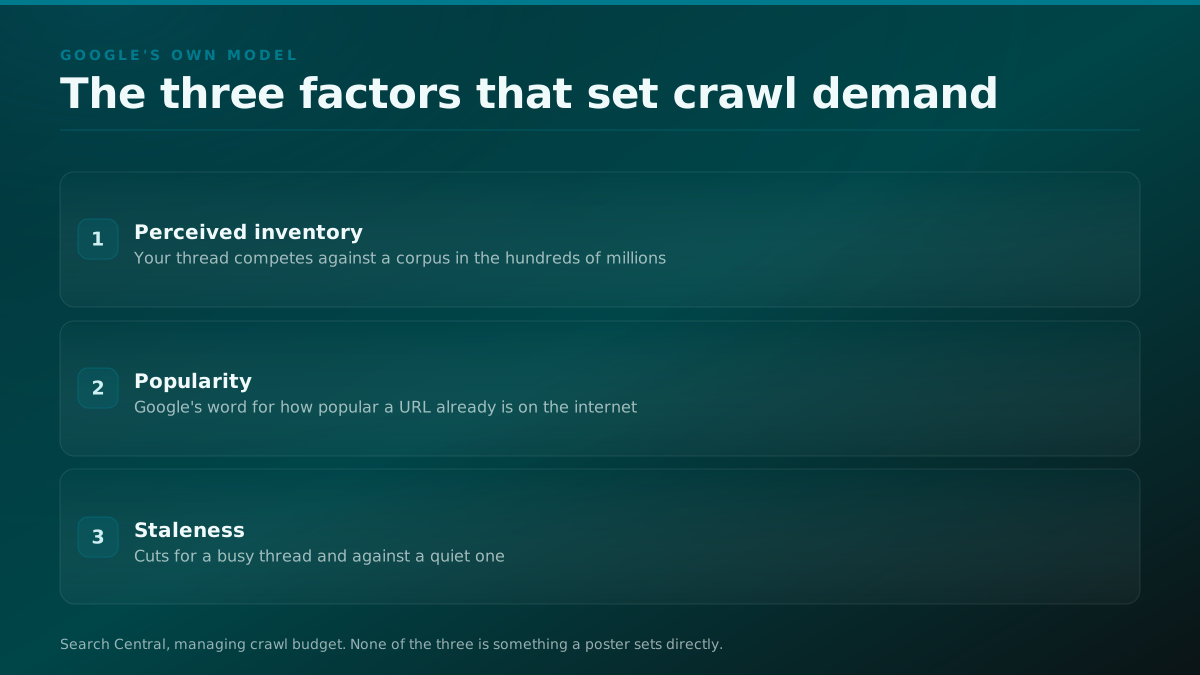
Google names three things that set crawl demand: perceived inventory, popularity, and staleness. Read those against a single new thread in a small subreddit and the picture is not encouraging. Perceived inventory is enormous, so your thread competes against a corpus in the hundreds of millions. Popularity is Google's word for how popular a URL is on the internet, which for a brand-new thread is nothing. Staleness cuts the other way for a busy thread and against a quiet one.
This is the mechanism underneath a folk observation that practitioners keep reporting without being able to explain. One operator tracked 2,000 commercial keywords and reported that while Reddit's domain visibility stayed stable, individual URL turnover was extreme, with a median ranking lifespan under five days on high-competition terms. Their reading was that Google is aggressively dropping stale threads in favour of newer ones with fewer links and better recency signals.
We are quoting that as an operator observation and not as a measurement, and so does its author, who ends by asking whether anyone has log-file data to confirm it. But it is directionally consistent with a documented model in which popularity and staleness are two of the three demand factors, and it is the only attempt at quantification we found in the whole corpus.
The comment permalink is not a page you can rank
A comment permalink is a real URL that loads a real page, and it is still not a page you can rank, for two independent reasons that do not depend on each other. Reddit's own markup answers the canonical question and then answers the indexing question separately, and it answers both against the permalink.
On archived Reddit HTML for a real named thread, old.reddit.com declares its canonical as the www.reddit.com slug URL. So does the comment permalink, on both hostnames. All three surfaces point at the same www thread address.
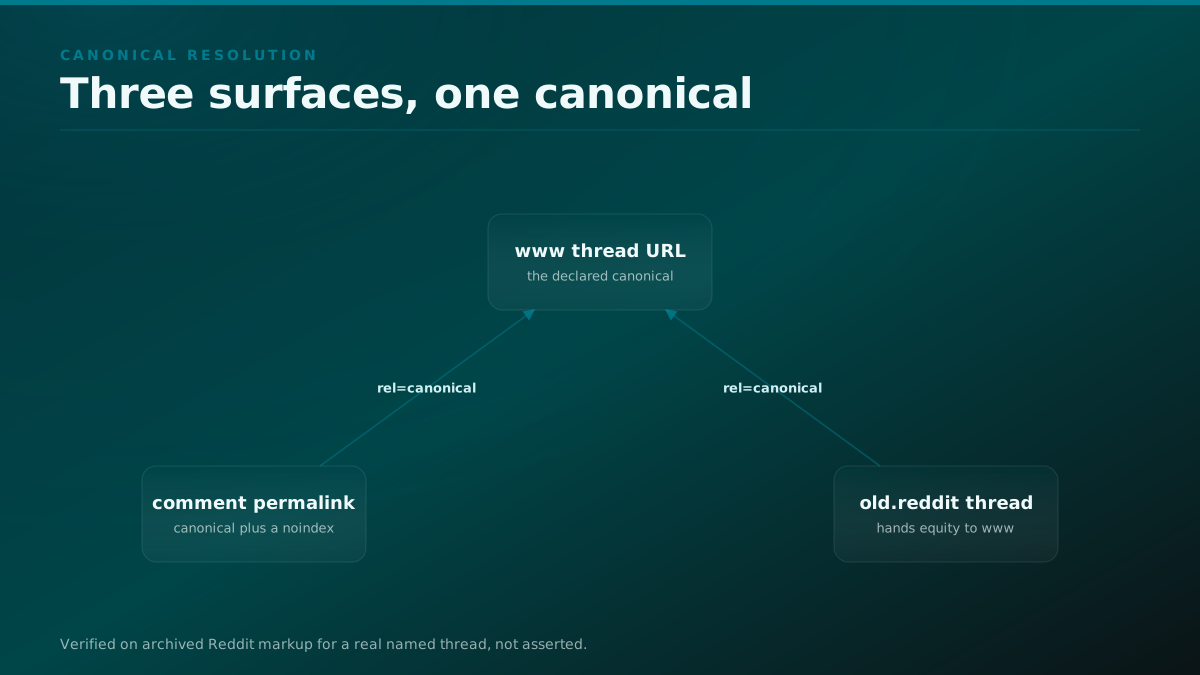
That answers the hostname argument. old.reddit.com is self-deprecating: it hands its equity to www rather than competing with it. There is nothing to choose between them because Reddit already chose.
The second mechanism is stronger and less known. On the same archived markup, the comment permalink carries a noindex robots meta tag while the thread page carries no robots meta at all. We verified this per file with a control: the canonical count was 1 in both documents, so the matcher was live in both and its zero on the thread page is a real zero rather than a failed read.
So a comment permalink is excluded from being its own indexed result twice, by two mechanisms that do not depend on each other. It points its canonical at the parent, and it asks not to be indexed.
01 / The thread page
- Stands out
- The only indexable unit of the four. It carries the title, the body, and whichever comments made it into the served markup.
- Best for
- If you are trying to be findable through Reddit, this is the object that has to exist, be reachable, and stay alive.
- Falls short
- Its lifespan is not yours to control, and the one operator who tried to measure it reported a median under five days on competitive terms.
02 / A comment on that page
- Stands out
- Indexed as text of the thread when it is present in the initial HTML, which is how a comment can be found through search at all.
- Best for
- This is where a genuinely useful answer earns its place, and where the writing advice in circulation is mostly correct.
- Falls short
- Presence in the initial HTML is not something you choose. On the thread we measured, 95% of comments were not there.
03 / The comment permalink
- Stands out
- Useful as a link you send to a person.
- Best for
- Nearly nothing. It is not a page you can rank.
- Falls short
- Canonical points at the parent, and Reddit's markup adds a noindex. It is excluded twice over, by two independent mechanisms.
The practical consequence: the thread is the unit, and you cannot rank a comment. Any advice that treats a comment permalink as a page to optimise is advice about an object that does not exist in the index.
A note on forum structured data, since somebody always asks
Google publishes a discussion forum markup spec and describes it as being for any forum-style site where people collectively share first-hand perspectives. Its own listed use cases include a social platform where users post and reply to comments. Required properties are an author, an author name, a publication date, and at least one of text, image or video. Recommended ones include the comment tree itself, a comment count, and interaction statistics.
The obvious question is whether Reddit emits it, and whether that is part of why Reddit does well in forum-shaped results. We cannot answer it. The crawler-facing document we could read does not carry it, and by the cloaking finding that tells us nothing about the Google-facing one. We are recording the question rather than answering it, because an unanswered question labelled as one is worth more than a confident guess.
What is worth carrying away from that spec regardless is a sentence Google puts at the bottom of every structured-data page.
From the field
Eligibility is not display
Google does not guarantee that features that consume structured data will show up in search results.
Markup makes a page eligible for a feature. It does not make the feature appear. That distinction is the same one this entire post is built on, one layer up: being readable makes you a candidate, and being a candidate is not the outcome.
The trap in the other direction
While we are in Google's documentation, there is an interaction rule here that is worth carrying away even if you never think about Reddit again, because it is the single most commonly inverted fact in technical SEO.
From the field
The interaction that traps people
For the noindex rule to be effective, the page or resource must not be blocked by a robots.txt file, and it has to be otherwise accessible to the crawler. If the page is blocked by a robots.txt file, the crawler will never see the noindex rule, and the page can still appear in search results.
Blocking a URL in robots.txt does not remove it from Google. It prevents the fetch, and preventing the fetch is what prevents Google from reading the noindex you also added. The two controls are not additive. Used together, the first disables the second.
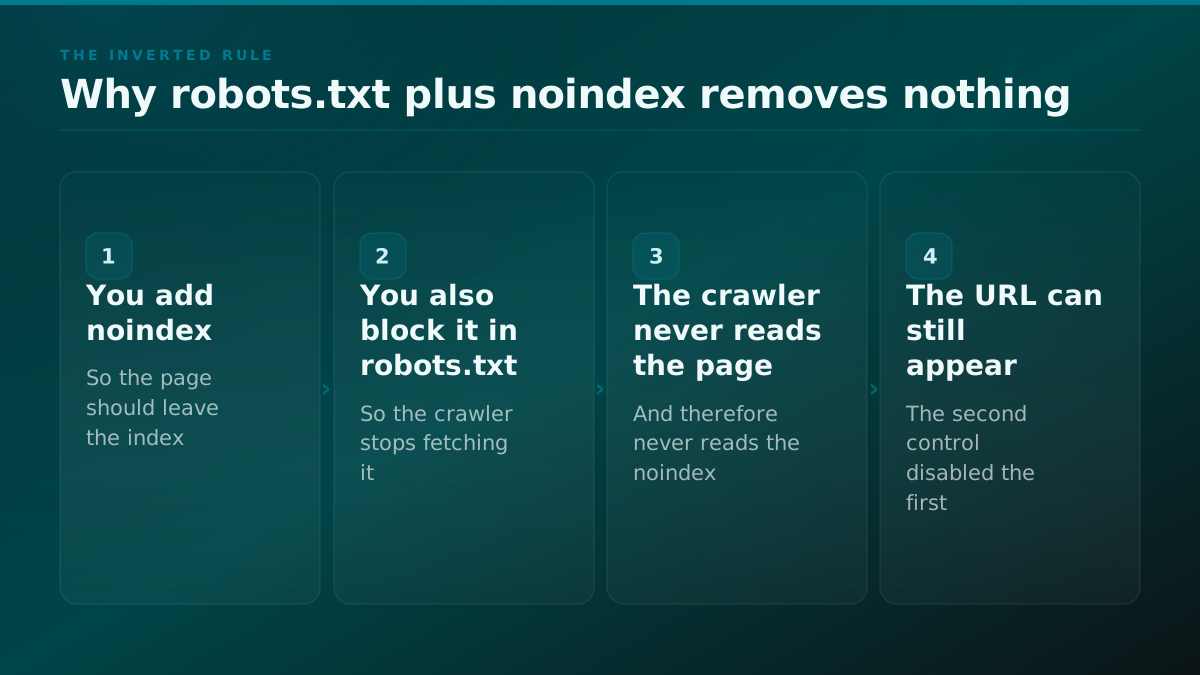
Google's instruction is to use noindex or a password, and to leave the page crawlable so the rule can be read. Removal is slow either way: Google says revisiting a page can take months depending on how important that page is on the internet.
This is also why we cannot answer one of the questions we were asked.
Indexed is not cited, and the denominator trap
Everything above is about whether a machine can read a thread. It says nothing about whether an assistant will name it, and the gap between those two states is where most of the money in this category is currently being spent.
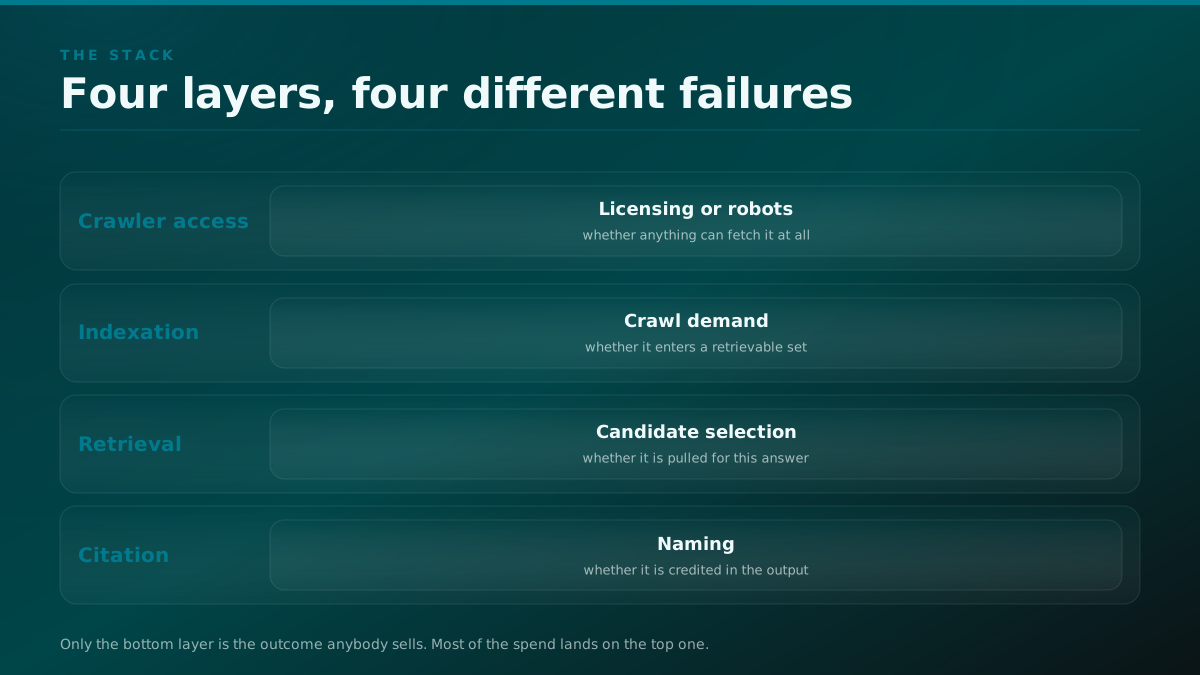
Four layers. Crawler access decides whether anything can fetch the page. Indexation decides whether it is in a retrievable set. Retrieval decides whether it is pulled as a candidate for a specific answer. Citation decides whether it is named. Each layer has its own failure, and only the last one is the outcome anybody sells.
Indexation is not a ranking factor and it is not a citation factor. It is the gate before both. A thread nothing can read is not a weak candidate, it is not a candidate.
Which brings us to a number we need to correct, gently, because it is in wide circulation and we have quoted its cousin ourselves.
You have probably seen "Reddit is 21% of Google AI Overview citations". Profound measured 680 million citations between August 2024 and June 2025 across three platforms, and published two columns.
Reddit's share of AI citations, both denominators, same dataset
| Platform | Share of ALL citations | Share WITHIN top ten sources |
|---|---|---|
| ChatGPT | 1.8% | 11.3% |
| Google AI Overviews | 2.2% | 21.0% |
| Perplexity | 6.6% | 46.7% |
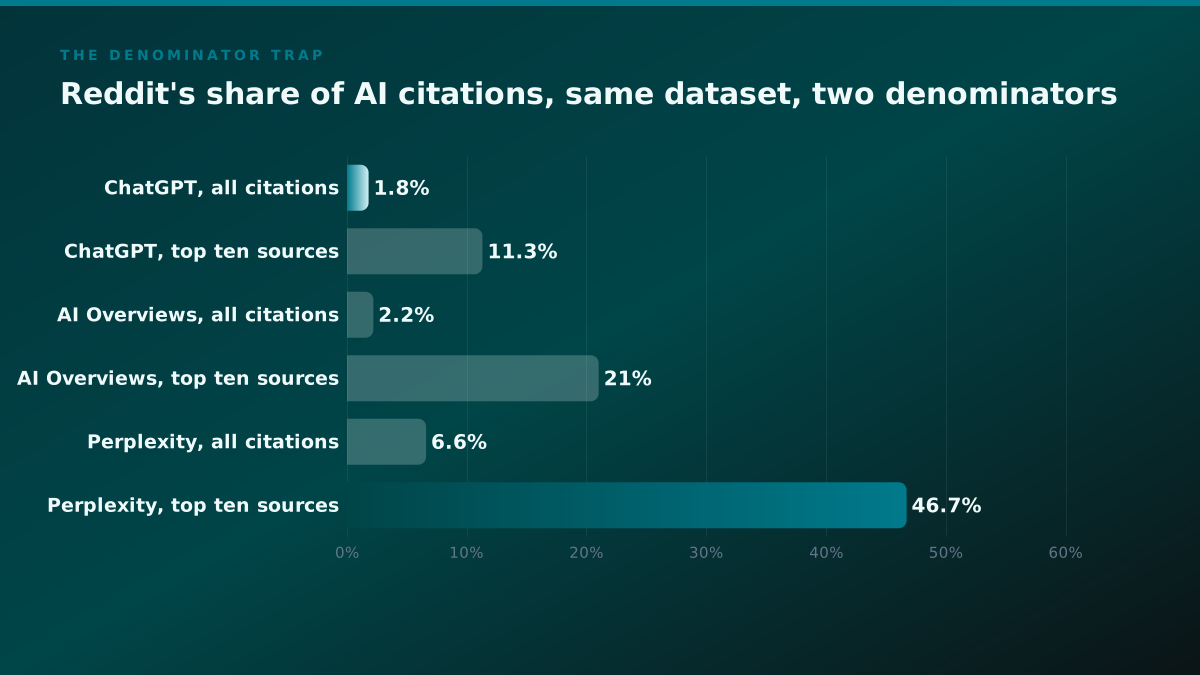
The 21% is the right-hand column. It means 21% of the top-ten-sources subset. In the same dataset, on the same page, Reddit is 2.2% of all AI Overview citations. The two numbers differ by roughly a factor of ten and neither is wrong; they answer different questions, and only one of them travels with the words that make it true.
A share figure without its denominator is not a fact, it is a shape. Reddit is 21% of AI Overview citations and also 2.2% of them, and both numbers come from the same dataset on the same page.
We hold the same position on this that we hold on every share figure, and we have written this out at length in our other work on AI citations: a citation-share percentage is a property of the query population somebody chose. Change the questions and the number changes. That is why our own measurement practice reports distributions rather than headline percentages, and it is why we are not going to close this post by telling you what percentage of anything Reddit is.
There is a temporal version of the same problem, and it is live. Adweek reported in January 2026, attributing to Bluefish among four sources, that YouTube appeared as a cited source in 16% of LLM answers over a trailing six months against 10% for Reddit, a reversal from earlier periods when Reddit was the dominant social source. We could not read the full methodology, which sits behind a paywall, so we are attributing the direction and not the precise series. Two days before we wrote this, practitioners were circulating studies showing Reddit citations in ChatGPT declining since 8 August.
What actually changes once a thread is indexed
Once a thread is indexed, a different and much shorter list of things starts to matter, and this is the part where the advice in circulation is largely right. An indexed thread that gets pulled as a candidate for an answer still has to be worth naming, and only a few of the inputs to that are things a poster actually controls.
A thread that is in the index and gets pulled as a candidate still has to be worth naming. Practitioners tracking this report the same shape from different angles: freshness matters more on some engines than others, source diversity varies wildly between them, and content that dominates one surface barely registers on another. One operator put it plainly after tracking it across three platforms: the overlap between what each one cites is surprisingly small.
So the honest list of what a poster controls is short, and every item on it is about the thread rather than about you:
The title is the query surface. The thread page's title is what Google matches. A thread titled as the question a person would type has a structural advantage over one titled as a statement, and this costs nothing.
Position in the comment tree is a visibility variable, not just a social one. If only the comments in the initial document are readable as text, then being one of them is a prerequisite. That is what upvotes buy you mechanically, separately from whatever they buy you socially.
Recency is doing more work than link equity here. Both Google's own demand model and the churn observation point the same way. A thread's window is shorter than a page's.
Removal is an indexation event. A moderator removing your comment does not just remove it socially. It removes the text from the document. We could find no first-party statement on how quickly Google reflects that, and we are not going to guess, but the direction is not ambiguous. Reddit's own posting rules for developer tools exist because the removal risk is the operational risk.
What you cannot control is the arrangement itself, and it is currently unsettled.
DEFAULT
The arrangement that makes Reddit visible, and its current state
February 2024
The licensing deal
Google and Reddit sign a content licensing agreement, reported at roughly sixty million dollars a year. Scope is data access, including continuous API access and quarterly bulk transfers, rather than a promise about ranking or citation.
June 2024
The crawler block
Reddit updates its public robots.txt to disallow every user agent, citing an increase in commercial scraping. Bing, DuckDuckGo, Mojeek and Qwant lose Reddit results. Google does not, because its access does not run through that file.
Through 2025
Reddit becomes the reference case
Reddit's prominence in AI answers becomes a category assumption, and a market of tactics is built on it. The share figures behind that assumption are measured by several firms and disagree with each other by an order of magnitude.
January 2026
The reversal
Adweek reports, attributing to Bluefish among four sources, that YouTube appeared as a cited source in 16% of LLM answers over a trailing six months against 10% for Reddit, a reversal from earlier periods.
July 2026
The renewal in doubt
The Wall Street Journal reports Reddit may not renew the Google arrangement. Reddit's stock falls 9%. Reddit says it is approaching negotiations by focusing on what is best for Reddit.
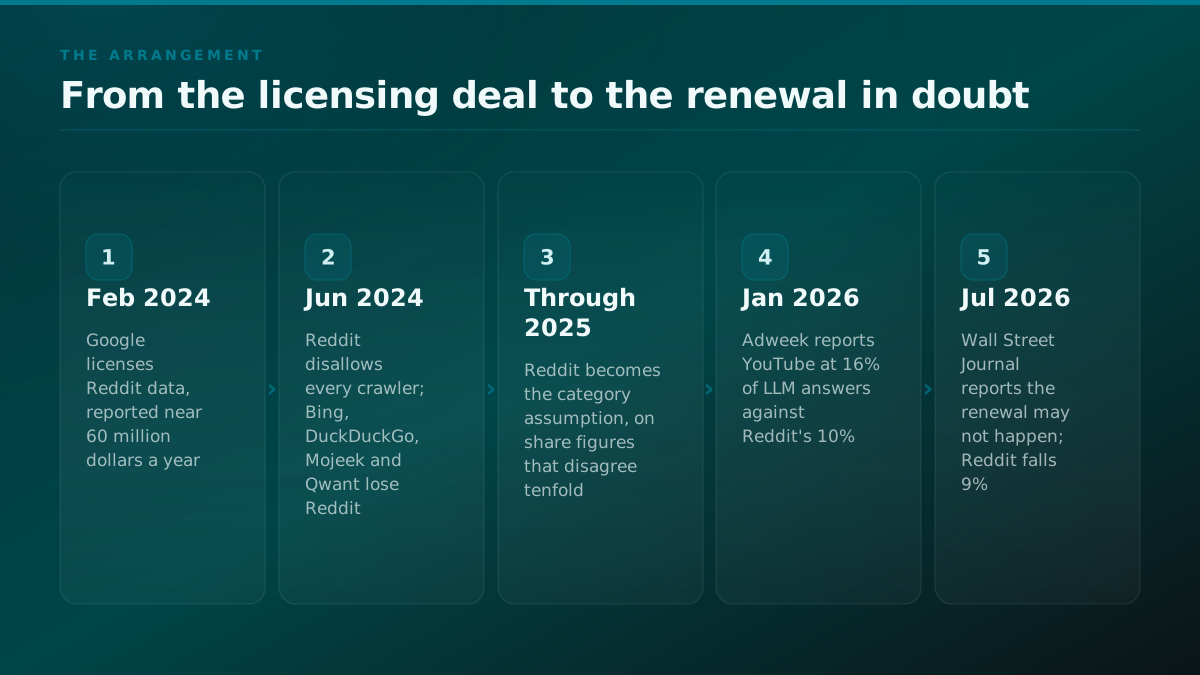
A tactic whose first step is ageing an account for six months is making a bet on a commercial negotiation it has no visibility into. That is not a reason to avoid Reddit. It is a reason to price the tactic as a bet rather than as an asset.
Check all of it yourself
None of this requires tooling. Here is the sequence, cheapest first.
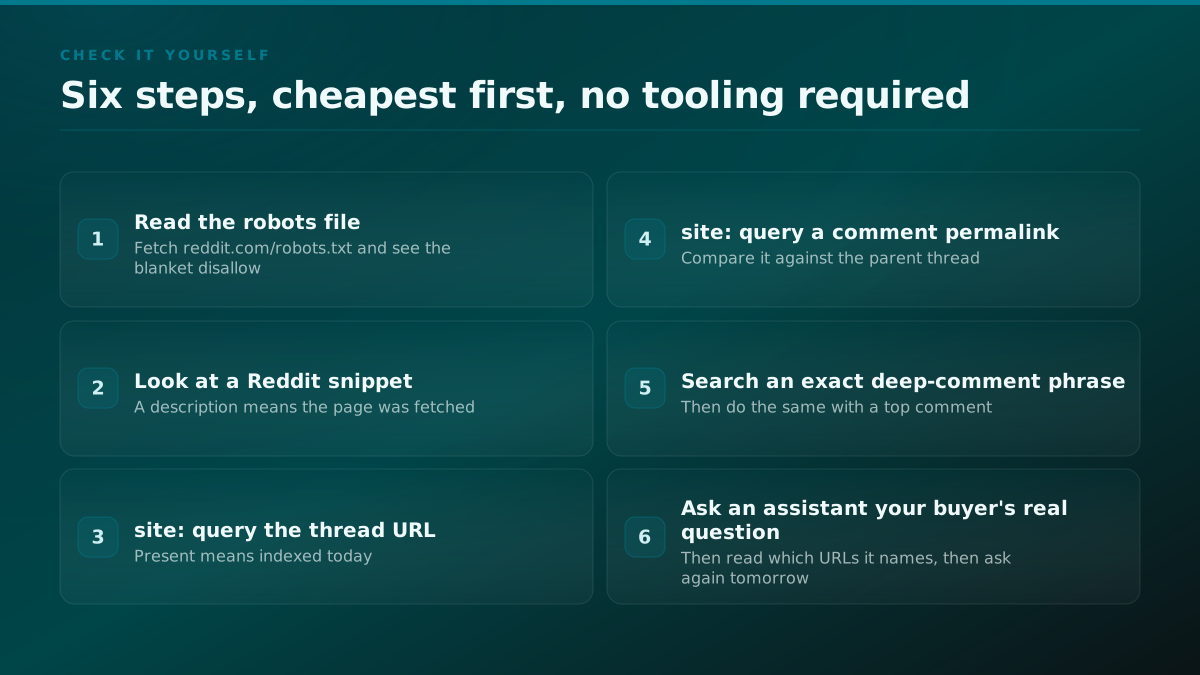
1. Read the robots file. Fetch https://www.reddit.com/robots.txt. Confirm for yourself that it disallows everything. Ten seconds.
2. Search for a Reddit thread and look at the snippet. If the result has a description, the page was fetched. Google's documentation says a link-only indexed URL does not get one. Ten seconds.
3. Check whether a specific thread is in the index. Use a site: query for the exact thread URL. Present means indexed. Absent means it is not there today, which is not the same as never.
4. Check the comment permalink separately. Run the same site: query against a comment permalink URL. Then run it against the parent thread. The asymmetry is the finding.
5. Search for the exact text of a deep comment. Put a distinctive phrase from a comment far down a large thread in quotes and search it. Then do the same with a top comment on the same thread. If the top one is findable and the deep one is not, you have reproduced the initial-render limit on a thread you chose.
6. Ask an assistant your buyer's actual question and read the sources. Not "what do you know about Reddit". The literal question a buyer types. Then read which URLs it names. Then ask again tomorrow.
Step 6 is the one that will surprise you, and it is the one where we have numbers.
Why nobody has written this down before
We should say plainly why a post like this did not already exist, because the answer is interesting and it is not that the question is unimportant.
We pulled the live search results for four versions of this question in August 2026. For the exact-match form, six of the ten ranking slots are forum threads, one is a truncated aggregator URL, one is vendor documentation, and three are editorial pages. All three editorial pages are generic Reddit SEO guides that rank on topical proximity, and not one of them addresses comment indexing at all.
The adjacent query "reddit indexing" is worse in an instructive way. Six forum threads, two videos, one money page, one editorial result, and three of the ten results are about a completely different subject: index funds, iOS Spotlight indexing, and database indexes. Google has no settled interpretation of that string, which is a fair description of the state of the question generally.
Then there is the demand side, and this is where we have to argue against our own interest. We measured the search volume for every phrasing of this question we could think of, on two independent commercial data sources, billed live. does google index reddit comments, reddit indexing, how to get reddit posts indexed, reddit not indexed google, index reddit post google, reddit comment seo: no data on either surface. Google's own autocomplete returned nothing at all for three of the six question-shaped seeds we tried, on an endpoint we proved was live with five positive controls in the same batch.
The only term in the whole cluster with measurable volume is reddit seo, at 590 monthly US searches, and its results page is held by four established content-marketing domains with no format gap to attack.
So the honest reading is this. There is real confusion here, visible in forum threads and in practitioner arguments, and there is close to no keyword demand attached to it, because people who hit this problem do not phrase it as a search. They argue about it with a colleague, which is exactly what the top-ranking result is a recording of.
We wrote it anyway, and the reason is the subject of this whole property. A question with no reference document and a results page full of people guessing is precisely the shape of question an answer engine has to synthesise from scratch. We would rather be the document it synthesises from than wait for a keyword tool to give us permission.
Why we will not give you a citation percentage
We ran a step-zero measurement of our own: 12 commercial queries, 5 identical repeats each, one model, one day. All 60 calls succeeded.
Seven of the twelve queries changed their outcome across repeats that were identical by construction.
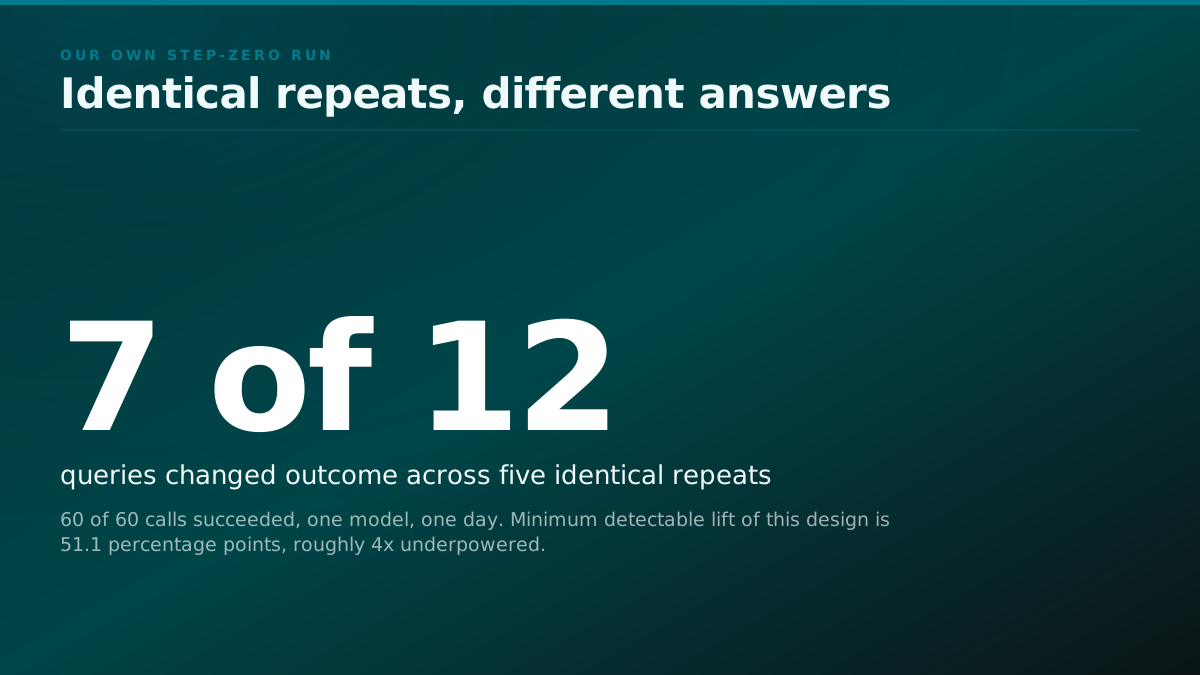
Not across days. Not across models. Not with any intervention. The same question, asked five times, gave different answers on more than half the query set.
We also ran a permutation test: 20,000 random splits of that same query set with no intervention applied at all. The null difference centred on zero, mean plus or minus 0.0016 with a standard deviation of 0.215. That standard deviation is the honest size of the noise you are working against.
And we ran the power analysis, which is the part most people skip. Our 12 by 5 design has a minimum detectable lift of 51.1 percentage points. It is roughly four times underpowered against the design that would actually detect a normal-sized effect. We say this in our own published work and we are saying it again here, because a measurement practice that hides its own limits is a marketing practice.
That is why a single share percentage from anyone, including us, should be read as a description of a query set rather than a property of Reddit.
What this means if you are choosing where to spend
We have no customers to point at. Citon is an AI-citation practice for developer tools and APIs and we have not yet run a client engagement, so nothing in this post is a client result and there is no case study behind it. That is a real limit on our authority and we would rather state it than let a reader infer otherwise.
What we do have is a method and a boundary, and the boundary is the useful part here.
If somebody is selling you Reddit placement as an AI-citation lever, the questions that separate a real offer from a shaped one are all indexation questions before they are citation questions. Which index are they talking about, given that most engines cannot crawl Reddit at all. Whether the thread they are placing in is one Google currently has, and how they know. Whether the comment will be in the initial render or below the fold of a lazy-loaded tree. What their evidence is for any timing claim about how fast a thread gets indexed, given that we could not find a published one.
And then the harder question, which is the one our other posts are about: what controlled evidence exists that the placement caused the citation, as opposed to coinciding with it. Our own AI Overview probe on the head term for this topic fired 5 times out of 5 with a median of 6 references, and cited citon.ai zero times out of 5. We are publishing that because it is what we measured, and because a practice that only publishes its wins is not measuring.
We would rather sell you a read than a promise. If you want to know what an answer engine currently says when your buyer asks their real question, that is a measurement, it takes four questions, and you can have it before deciding anything. Our pricing is what it is afterwards.
What would change our mind
Written before anybody reads it, because a falsification condition invented after the result is not one.
We would change the initial-render claim if a controlled read of what Googlebot actually receives from www.reddit.com showed a full comment tree in the served document. We measured the crawler-facing variant, and the cloaking finding means the Google-facing variant is genuinely unknown to us.
We would change the comment-permalink claim if current live markup dropped the noindex. Our reads are on archived HTML because Reddit does not serve us the live document, and archived markup is a claim about Reddit's long-standing pattern rather than about this morning.
We would change the "indexation is the binding constraint" framing if somebody published a controlled test showing that threads matched on index status but differing on some other property citation at materially different rates. That would mean the gate is somewhere else, and we would want to know.
What would not change our mind is a number going up. A thread that got indexed after somebody did something is not evidence that the something caused the indexation, and neither is a citation that appeared in the same month as a campaign. That is the whole reason we run a held-out arm, and it is why we publish what measuring lift actually requires rather than a dashboard.
And what would not change our mind is somebody telling us the mechanism has moved without showing us the fetch. Every claim in this post has a command or a URL attached to it precisely so that the next person to check does not have to take our word for it.
Sources
Every number above, and where it came from. A figure without a row here is one we should not have printed.
- Reddit's public robots.txt
- Fetched live 2026-08-19. HTTP 200, 538 bytes, User-agent star, Disallow slash, with no Allow line and no Googlebot section. Byte-identical under a browser user agent and under curl's default (sha256 prefix 41aea42110242175 on both). A negative control on a nonexistent path returned 403, so the 200 is a real result rather than a matcher that answers 200 to anything.
- MERJ, investigating Reddit's robots.txt cloaking strategy
- The methodology is the reason this is citable: Reddit verifies Google IP ranges and blocks agents that merely claim to be Googlebot, so MERJ retrieved the page through Google's own Rich Results testing tool, which fetches from Google infrastructure. Their finding is that Reddit serves a different robots.txt to Google. The article confirms a divergent file exists; it does not publish the exact rules Googlebot receives, and neither do we.
- 9to5Google, Reddit blocks search engines other than Google
- The June 2024 change, its stated reason, and the engines it affected. Bing, DuckDuckGo, Mojeek and Qwant lost Reddit results; Kagi kept them only by buying index data from Google.
- Google Search Central, managing crawl budget for large sites
- Crawl capacity limit and crawl demand, in Google's own words, including the three named demand factors of perceived inventory, popularity and staleness. Also the sentence that tells most site owners to stop reading, which is why this guide is about Reddit and not about you.
- Google Search Central, consolidating duplicate URLs
- The canonicalization signals and Google's own strength labels for them: redirects and rel=canonical are called strong signals, sitemap inclusion a weak one. Note what the page does NOT say, which we flag in the body rather than paper over.
- Google Search Central, block search indexing with noindex
- The interaction rule this whole post turns on, verbatim: for the noindex rule to be effective, the page must not be blocked by a robots.txt file. A crawler that never sees the page never sees the rule.
- Google Search Central, introduction to robots.txt
- That robots.txt is "used mainly to avoid overloading your site with requests; it is not a mechanism for keeping a web page out of Google", and the trap that follows: a blocked URL can still be indexed from links, and then the search result carries no description.
- Google Search Central, JavaScript SEO basics
- The render queue itself, which decides what a lazy-loaded comment tree is worth. The storage-clearing and permission-declining behaviour discussed in the body is not documented on this page; we cite it as widely observed crawler behaviour, not as something Google has published.
- Adweek, on Bluefish's YouTube-vs-Reddit AI citation share
- Bluefish found that YouTube appeared as a cited source in 16% of LLM answers over the past six months, against 10% for Reddit, a reversal from earlier periods.
- Google Search Central, discussion forum structured data
- What Google publishes about forum markup, its required properties, and the sentence that keeps eligibility honest, which is that Google does not guarantee features consuming structured data will appear.
- Profound, AI platform citation patterns
- 680 million citations, August 2024 to June 2025, across ChatGPT, Google AI Overviews and Perplexity. The source of the denominator correction in this post: Reddit is 1.8%, 2.2% and 6.6% of ALL citations on those three platforms, and 11.3%, 21.0% and 46.7% WITHIN each platform's top ten sources. Sampling method and prompt selection are not disclosed.
- The Verge, Google's licensing deal with Reddit
- The February 2024 agreement behind the widely quoted sixty million dollar figure. Scope is data access, including API access and bulk transfers, rather than ordinary web crawling.
- eMarketer on the Wall Street Journal report that Reddit may end the Google deal
- Late July 2026. Reddit is weighing whether to shut off Google's access for AI training, and is approaching the negotiation, in its own words, by focusing on what is best for Reddit.
- Our own initial-render measurement
- One real thread, r/webdev post 1vj0gax, 5,232 upvotes and 505 comments confirmed through our own Reddit data infrastructure on 2026-08-19. In the served HTML: 25 shreddit-comment elements and 25 distinct comment permalinks, so the two counts agree and the number is not a parse artifact, against 98 more-comments markers and 109 lazy-load elements. Negative control on a nonexistent element name returned 0. Our own measurement.
- Our own AI Overview probe
- reddit seo, US desktop, 2026-08-19, 5 trials attempted, 5 usable, 0 discarded. The AI Overview fired on 5 of 5 with a median of 6 references. citon.ai was cited 0 of 5. Our own measurement, and the honest baseline this post is written from.
- Step-zero measurement run
- 12 money queries times 5 identical repeats, 60 of 60 calls succeeded, one model, one day. Seven of the twelve flipped outcome across repeats that were identical by construction. Our own measurement.
- Permutation test
- 20,000 random splits of the same query set with no intervention applied. Null difference centred on zero: mean plus or minus 0.0016, standard deviation 0.215. Our own measurement.
- Power analysis
- The 12x5 design has a minimum detectable lift of 51.1 percentage points, roughly 4x underpowered. A 40 query by 40 sample design reaches 9.9pp. Our own measurement.
Reddit indexation, answered directly
- Does Google index Reddit comments?
- Comments are indexed as text on the thread page, not as pages of their own. A comment permalink canonicalizes to the parent thread and carries a noindex on Reddit's long-standing markup, so it is excluded twice as a separate URL.
- Why do Reddit results appear in Google if Reddit's robots.txt disallows everything?
- Because Google's access does not come through that file. It runs through a licensing arrangement signed in February 2024, and Reddit serves a different robots.txt to verified Google infrastructure. Bing, DuckDuckGo, Mojeek and Qwant all lost Reddit results when the public file changed in June 2024. Google did not, because it was never reading that file.
- Are all the comments on a big thread indexed?
- No. Only comments present in the initial HTML can be read as text at all. On one real 505-comment thread we counted on 19 August 2026, exactly 25 comments were in the served markup and the other 480 sat behind lazy-loaded fetches. That is 4.95% of the discussion, and the rest is not text a stateless crawler reaches.
- Does old.reddit.com rank separately from www.reddit.com?
- No, and there is nothing to choose between them because Reddit already chose. Every old.reddit page we checked declares the www slug form as its canonical, so the old hostname hands its equity to the new one rather than competing with it. The comment permalink does the same thing, on both hostnames, pointing back at the same parent thread URL.
- How long does a new Reddit thread take to get indexed?
- We looked for a first-party or well-sourced answer and did not find one, so we will not give you a number. The only relevant sentence Google publishes is that a page may sit in the render queue for a few seconds, but that it can take longer. Any figure in hours was measured once, without a control.
- Is being indexed enough to be cited by an AI assistant?
- No. Indexation is the gate before retrieval and citation rather than a substitute for either of them. There are four separate layers here, crawler access, indexation, retrieval and citation, and each one has its own failure. Reddit is a large share of what gets retrieved and a much smaller share of what actually gets named in an answer.
- Is Reddit 21% of Google AI Overview citations?
- That figure is 21% of the top-ten-sources subset in Profound's dataset of 680 million citations. Reddit is 2.2% of all AI Overview citations in that same dataset, and both numbers appear on the same page. The two answer different questions, and only one of them usually travels with the words that make it true.
- Does a removed or deleted Reddit post drop out of Google immediately?
- We found no first-party answer for Reddit specifically. What Google does publish is that revisiting a page can take months depending on how important that page is on the internet, so treat instant removal as unproven. A moderator removing your comment removes the text from the document immediately; when Google reflects that is a separate question.
Keep reading
AI citations
Reddit is cited by AI. That is not a reason to buy upvotes.
Published Reddit citation shares run from 2% to 46.7%, and one study puts Reddit at 67.8% of every URL ChatGPT retrieves and then declines to cite.
23 min read
AI citations
LLM SEO, what it actually is and what the work looks like
Google says its AI features run on the same ranking systems as Search, so the tactics are familiar. What changed is how you tell whether the work landed.
46 min read
AI citations
Best AI SEO Agency for Developer Tools and API Companies
A five-question checklist for vetting an AI SEO agency, built from what real developer-tool buyers report going wrong, not a ranked vendor list.
24 min read