Profound Pricing: What an AI Visibility Tool Costs
Profound publishes two tiers and hides the third. What Starter and Growth gate, and what Enterprise costs per brand per country, per one practitioner's report.
Citon23 min read
Short answer
What does Profound actually cost?
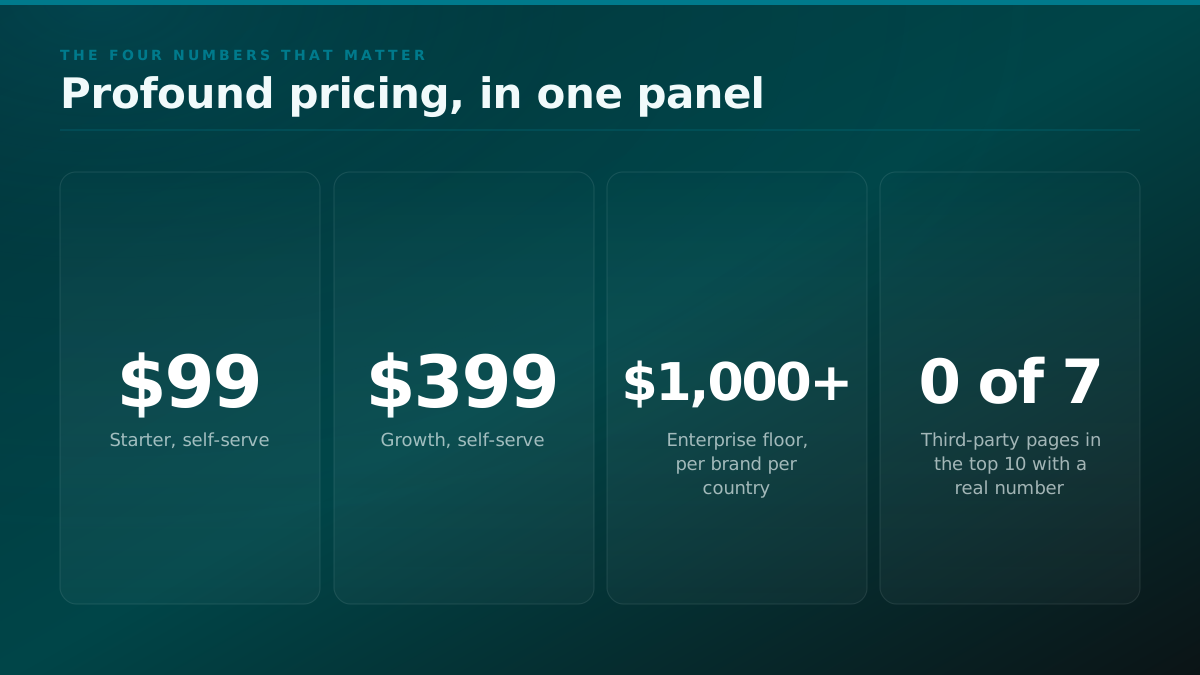
Profound publishes two self-serve tiers on its own pricing page: Starter at 99 USD a month (billed yearly) for 50 prompts tracked on ChatGPT only, and Growth at 399 USD a month for 100 prompts across 3 answer engines. The Enterprise tier has no public number. A Profound team member responding on Reddit confirmed enterprise pricing scales with prompt volume, region count, persona count, and whether ChatGPT Shopping Analytics is included, and a separate SEO practitioner who has priced the product independently put the historical floor at 1,000 USD a month per brand per country, with the average deal landing higher. Multiply that floor by a realistic multi-region enterprise footprint and the number lands closer to 4,000 to 5,000 USD a month before add-ons.
Profound publishes two of its three tiers in the open. Starter and Growth sit on tryprofound.com/pricing with real numbers attached, 99 USD a month and 399 USD a month, billed yearly. The third tier, the one most buyers evaluating a real deployment actually need, is not there. It reads "Custom" and routes to a sales call, and the seven vendor-content-marketing pages currently ranking for this exact search term all repeat the same two public numbers without ever putting a figure on the one that is not public. That gap is what this post fills.
The search itself is a reasonably crowded one. profound pricing saturates
LinkedIn's own 30-result search cap with 29 distinct authors discussing it
inside a 90-day window, which is not one vendor's own posting cadence, it is
a broad, live conversation among buyers and practitioners comparing notes.
Reddit carries the same pattern from a different angle: separate threads
asking whether anyone has done real due diligence on Profound, whether the
tool is worth the spend, and, in the thread this post leans on most, what the
Enterprise tier actually costs. None of that traffic is Profound's own
marketing. It is the sound of a category's buyers doing homework the vendor's
own pricing page does not fully support.
What Profound actually publishes
At a glance
Profound's three tiers, side by side
| Tier | Price | What it gates |
|---|---|---|
| Starter | 99 USD a month, billed yearly | One engine (ChatGPT only), 50 prompts, one seat |
| Growth | 399 USD a month, billed yearly | 3 engines, 100 prompts, 3 seats, CSV/JSON export |
| Enterprise | Custom, no public number | Up to 9 engines, custom prompt plan, API access, SSO/SOC2 |
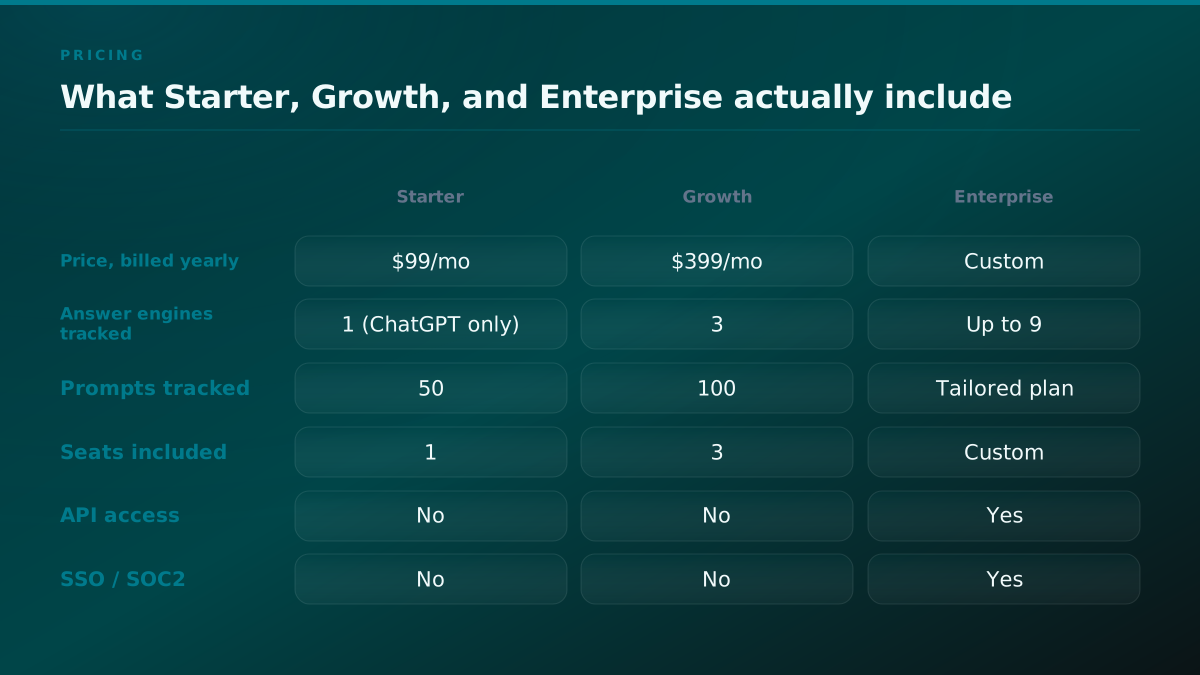
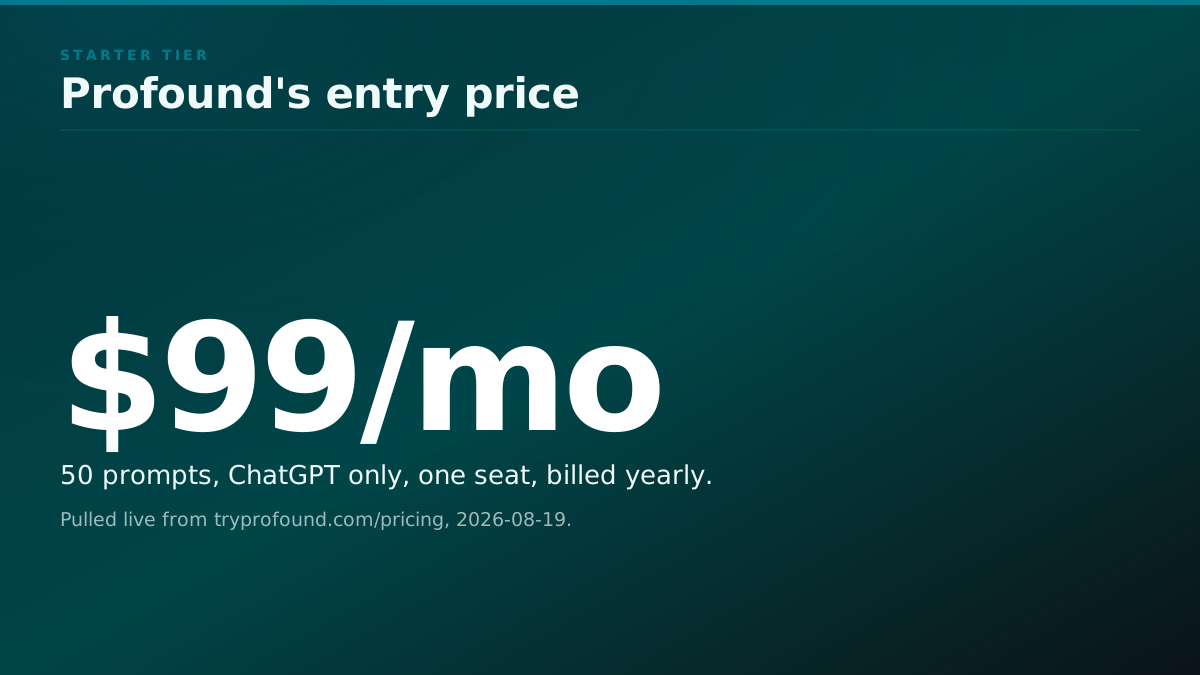
Starter costs 99 USD a month, billed yearly, and tracks 50 prompts against ChatGPT only, with one seat and no API access. Growth costs 399 USD a month, billed yearly, and expands that to 3 answer engines and 100 prompts, with 3 seats and CSV/JSON exports. Both numbers come directly off Profound's own current pricing page, pulled live rather than copied from an older screenshot, because a vendor pricing page is exactly the kind of thing that changes between one blog post's publish date and the next reader's visit. The two numbers are not just Profound's own claim either: an independent AEO-tool builder with no relationship to Profound has separately cited the same bracket in public.
The published price is the easy part. What it actually gates is the part buyers misjudge, and it is worth being specific about before touching the Enterprise question at all.
The full tier breakdown, as published
| Field | Starter | Growth | Enterprise |
|---|---|---|---|
| Price | 99 USD a month (billed yearly) | 399 USD a month (billed yearly) | Custom |
| Answer engines tracked | 1 (ChatGPT only) | 3 | Up to 9 |
| Prompts tracked | 50 | 100 | Tailored plan |
| Agents credits/month | 100 | 400 | Not published |
| Seats | 1 | 3 | Custom |
| Regions/languages | 1 language, 1 region | 1 language, 1 region | Custom |
| ChatGPT Shopping | Not included | Not included | Included |
| API access | No | No | Yes |
| SSO/SOC2 | No | No | Yes |
What "prompts tracked" actually limits
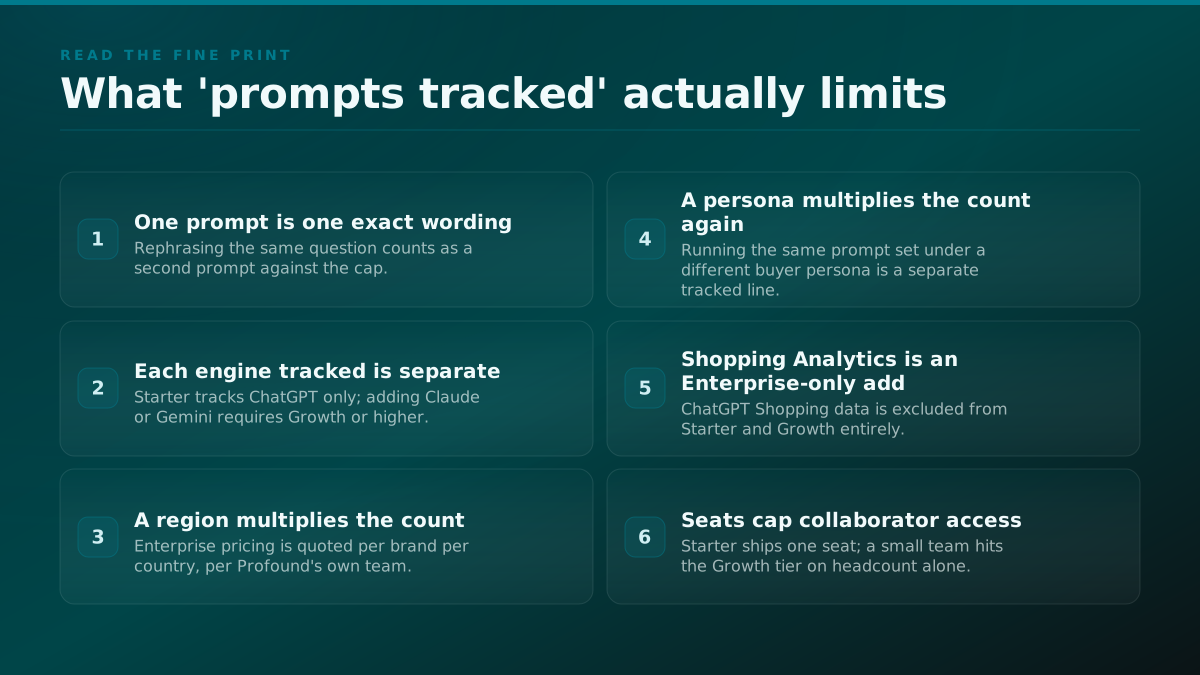
A prompt, in Profound's own accounting, is one exact wording tracked against one engine. Rephrasing the same underlying question and asking it again counts as a second prompt against the cap, not a refinement of the first. Tracking the identical prompt set in a second market adds to the count again, and so does running that same set under a second buyer persona, a feature Profound's own team names explicitly as a pricing input (more on that below). Shopping Analytics inside ChatGPT is excluded from both self-serve tiers entirely and only appears at Enterprise. None of this is hidden, exactly, it is published in the fine print of the pricing page, but a buyer scanning "99 USD a month" and "399 USD a month" and mentally sizing a deployment against their own query volume will consistently under-count what a real program actually needs.
It is worth being concrete about what separates Starter from Growth in practice, because the jump from 99 to 399 USD is 4x the price for 2x the prompt count. The rest of that difference buys engine breadth, not prompt volume: Starter watches ChatGPT and nothing else, and a growing share of buyer research now happens inside Claude, Gemini, and Perplexity as well. A team that has only ever measured its ChatGPT presence has measured a third to a half of its actual AI-search footprint, not all of it, and Growth is priced as the tier where that specific gap closes.
Both published prices are also shown as annual commitments, "billed yearly, 2 months free" is the exact phrasing on Profound's own page. Neither Starter nor Growth displays a separate month-to-month rate on the public pricing page itself, which is common practice (the discount is the incentive to commit) but worth knowing before a buyer assumes 99 USD or 399 USD is available without a yearly contract. A team that wants to trial the product for a single quarter before committing annually should ask directly whether a monthly option exists off-menu, since the page does not answer that question either way.
Breaking the two self-serve tiers down to a per-prompt basis makes the value shift between them easier to see than the headline prices alone. Starter's 99 USD for 50 prompts works out to just under 2 USD per tracked prompt per month. Growth's 399 USD for 100 prompts works out to just under 4 USD per tracked prompt, roughly double the per-prompt cost of Starter, for triple the engine coverage and triple the seats. A team optimizing purely for prompt volume gets more for its money on Starter; a team that actually needs to see Claude and Gemini, not just ChatGPT, is paying for coverage breadth on Growth, not for a cheaper per-prompt rate, and the two tiers should be compared on that basis rather than treated as the same product at two different sizes.
The number Profound does not publish
A published starting price and an actual deal price are two different numbers the moment a vendor calls the top tier "custom." The gap between them is exactly where a buyer's evaluation should spend its time, not the part that is already on the pricing page.
Search "profound pricing" today and the SERP itself makes the gap visible.
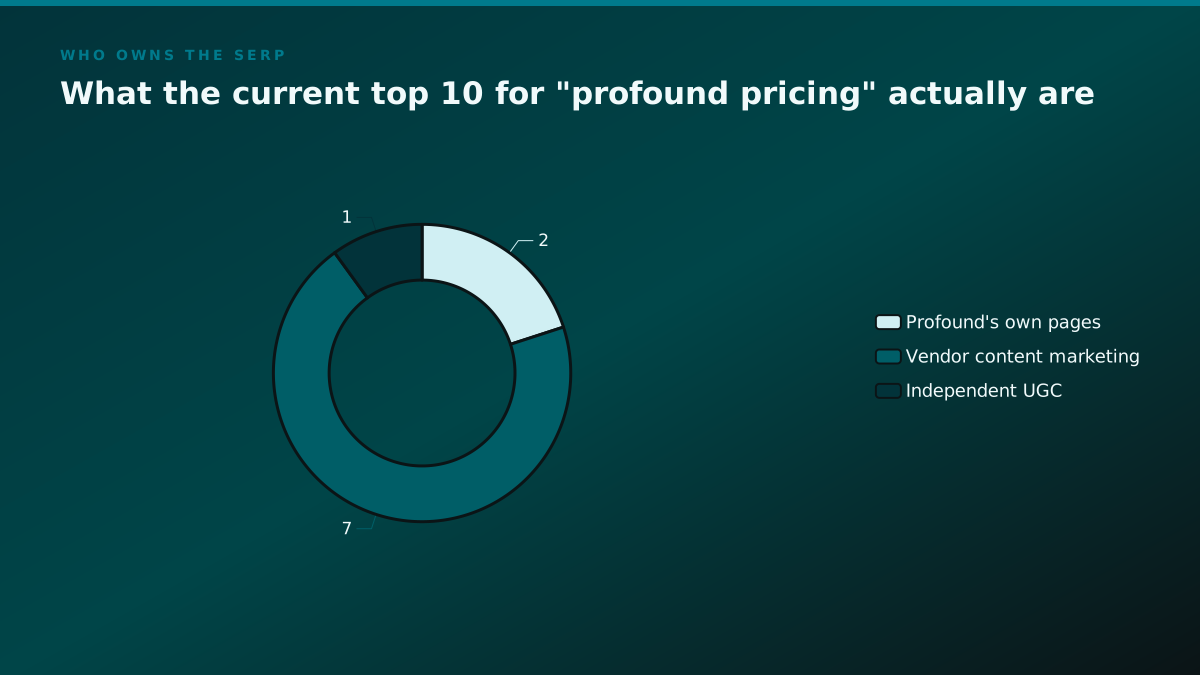
Of the ten results currently ranking, two are Profound's own pages (the pricing page and the homepage), seven are competing AI-visibility vendors' own content marketing, and one is a live r/aeo thread asking the exact question a buyer types into Google when the pricing page stops being useful: what does the Enterprise tier actually cost?
What the current top-10 results for "profound pricing" actually are
| Result | Shape | Publishes a real enterprise number |
|---|---|---|
| tryprofound.com/pricing | Vendor's own pricing page | No |
| tryprofound.com (homepage) | Vendor's own homepage | No |
| r/aeo enterprise-pricing thread | UGC, unanswered publicly | Partial (a floor, not a range) |
| Competing vendors (trakkr.ai, workduo.ai, and others) | Vendor content marketing | No |
| G2 reviews | Review aggregator | No |
The seven vendor-content results are worth a closer look, because none of them is what it appears to be at first glance. A G2 reviews page for Profound sits inside that top 10, and it is genuinely useful for gauging product satisfaction, star ratings and written reviews from real, verified customers, but it carries no independent pricing breakdown of its own; a review platform reports what users say about the product, not what they paid for it. Several other results are competing vendors publishing their own "Profound alternatives" or "Profound vs X" comparison pieces, which is standard competitive content marketing and not dishonest on its face, but it means the number a buyer reads on those pages is filtered through a competitor's own incentive to make Profound look expensive or limited. HubSpot's own "HubSpot AEO vs. Profound" comparison is one example of this pattern from a company with an obvious reason to frame the comparison in its own favor. None of that makes those pages worthless, but it does mean a buyer reading them is reading marketing copy with a stated angle, not a neutral pricing reference, which is the gap a genuinely independent breakdown is meant to close.
That thread did not get a clean public answer, but it got two real, useful partial ones.
The first is from a Profound team member, replying under the username u/nick-profound, in response to the original question:
"Enterprise pricing is honestly really custom depending on a few factors: how many prompts you want to track, how many regions you want to track them in, if you want to add in personas, and if you're interested in Shopping Analytics in ChatGPT or not. The reason most brands don't give public enterprise pricing is that it really depends on your needs, so if I quote you a number now without knowing exactly what you need then it anchors you to an incorrect price."
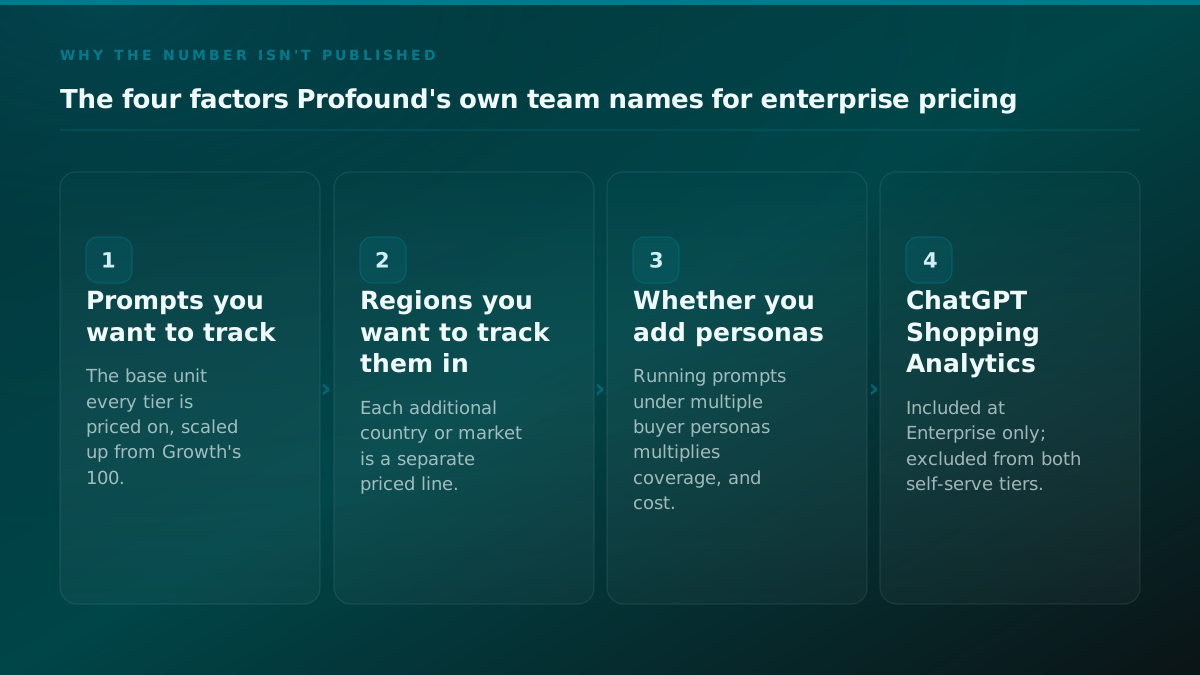
That is a real, specific, quotable answer to why no number exists, and it is worth taking at face value rather than reading it as a dodge: a SaaS vendor anchoring a buyer to a wrong number before scoping the account is a genuine sales-process risk, not just a way of hiding a bad price. It does confirm the four inputs a buyer should expect to be asked about on any real Enterprise call.
The second useful answer, further up the same thread, came from a named, credentialed SEO and AEO practitioner posting under u/maltelandwehr:
"It used to start at USD 1,000 per month per brand per country. Average cost is probably significantly higher. Unless you are a Fortune 500 and will make use of Profound's professional services, I strongly recommend to look at other solutions as well."
That is the closest thing to a real Enterprise anchor that exists publicly. It did not draw a correction from Profound's own team member replying later in the same thread, who addressed the pricing-transparency question directly without disputing the 1,000 USD per brand per country figure.
What we actually know about the Enterprise number
| Source | What it says | What it does not say |
|---|---|---|
| Profound's own pricing page | Custom/Tailored, no number | Nothing about a floor, a per-brand or per-country unit, or a typical deal size |
| u/maltelandwehr (r/aeo) | Used to start at 1,000 USD a month per brand per country; average is likely higher | Whether that floor still holds today, or what "average" means numerically |
| u/nick-profound (r/aeo, Profound team) | Price depends on prompts, regions, personas, and Shopping Analytics | A number, a range, or even an order of magnitude |
What that floor turns into for a real deployment
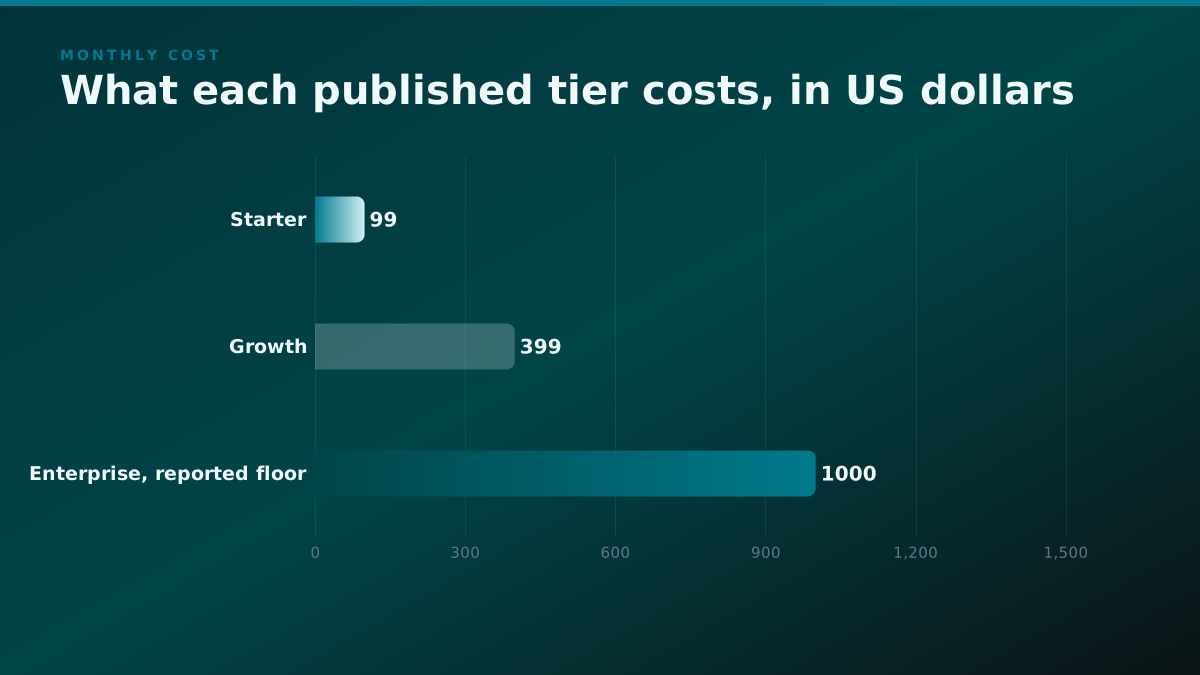
A single-brand, single-country Enterprise deal at that reported floor prices out near 1,000 USD a month, which is already 2.5x Growth's published rate for a tier whose feature list (up to 9 engines, custom prompt volume, API access, SSO and SOC2 compliance) goes well beyond what Growth ships. Multiply that per-brand-per-country unit by a realistic multi-region enterprise footprint, three to four brand-and-country combinations being a common shape for a company that has outgrown Growth in the first place, and the number lands in the 4,000 to 5,000 USD a month range before personas or Shopping Analytics are added on top. That figure is our own extrapolation from the real, reported floor above, not a second number Profound itself has disclosed, and it is worth treating as a planning anchor rather than a quote.
This is also the point where the per-brand-per-country unit stops being a footnote and starts being the entire quote.
Pricing per brand per country sounds like a footnote until you are the company running four regional storefronts under one brand. At that point it is the whole quote, not a modifier on it.
A company selling under one brand in one market never sees this line item. A company running regional storefronts, a US brand and a separate EU or APAC entity, or a portfolio of sub-brands under one parent, hits it immediately, and the Enterprise number scales roughly linearly with however many of those units exist. That is also consistent with why Profound's own team frames the number as depending on "how many regions you want to track them in" rather than offering a flat enterprise rate: the pricing model is closer to a per-market license than a single company-wide subscription, even though nothing on the public pricing page states that structure directly.
Is this even the right question for an AI answer engine to cite
Since this post is itself trying to answer a query that fires an AI Overview 5 out of 5 times in testing, currently citing nobody, it is worth being explicit about what would make a page like this one a candidate reference: a real, dated, sourced number, attributed clearly to where it came from, rather than a restatement of the vendor's own marketing copy. Six of the ten organic results for this exact query are vendor content marketing repeating Profound's two public numbers with no independent verification and no attempt at the Enterprise figure at all. An answer engine summarizing "what does Profound cost" from that result set has, at best, two real numbers to work with and nothing on the tier most enterprise buyers are actually asking about. That is the same structural gap this post exists to close for a human reader, and it happens to be the same gap an AI answer engine faces when it tries to synthesize a complete answer from the current SERP.
A worked example
Take a company running three brand-and-country combinations, a common shape for a business that has expanded past a single home market: a US storefront, a UK entity, and an EU entity under one parent brand. At the reported 1,000 USD per brand per country floor, that footprint alone prices out to roughly 3,000 USD a month before any of the three additional factors Profound's own team named are applied. Adding personas, tracking how the same core prompt set performs for two or three distinct buyer segments rather than one, is a realistic add for a company that size, and enabling ChatGPT Shopping Analytics is a natural fit for any brand with a retail or ecommerce component. Stack those on top of the 3,000 USD regional floor and the 4,000 to 5,000 USD range cited earlier stops being an abstract estimate and becomes a plausible line-item budget for exactly this kind of buyer, three markets, a couple of personas, shopping data included. A single-market, single-brand company sits much closer to the bare 1,000 USD floor, since none of the multiplying factors apply, which is also why the reported number is better read as a per-unit price than a flat enterprise rate.
Which tier actually fits
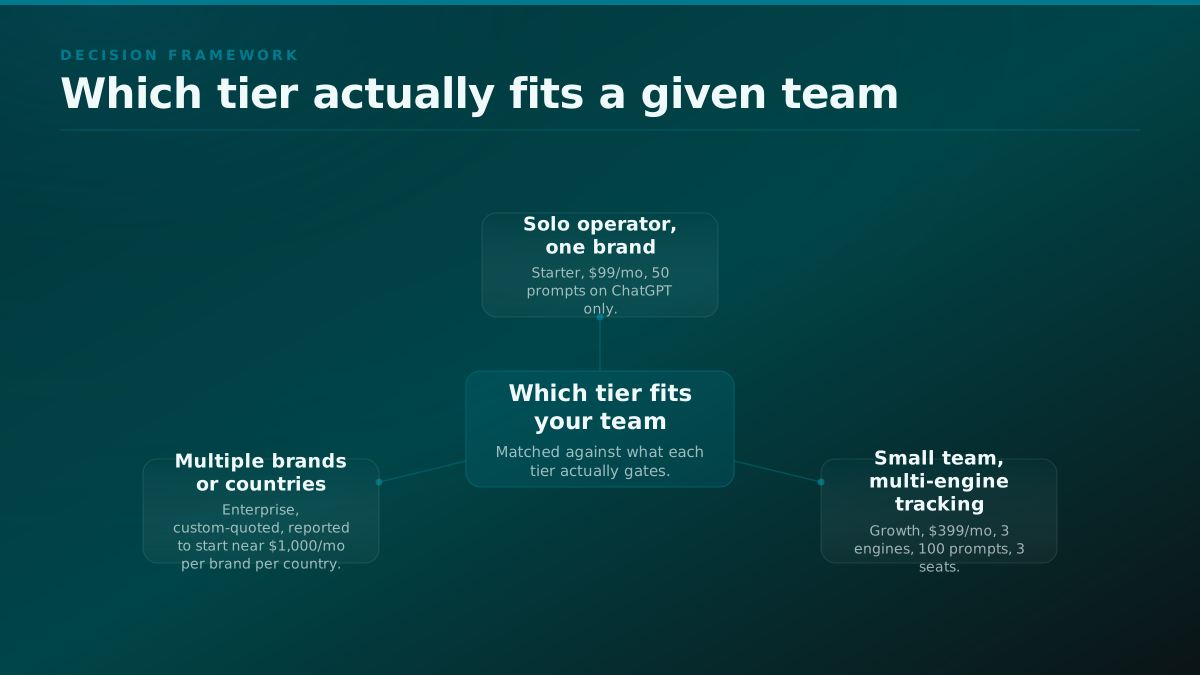
A solo operator or a single small brand tracking one channel of AI answers fits inside Starter's 99 USD a month ceiling comfortably, as long as ChatGPT is the only engine that matters and 50 prompts covers the real query set. A small team that needs to see Claude and Gemini alongside ChatGPT, and needs more than one person with dashboard access, outgrows Starter on the seat count alone and lands on Growth. A company running multiple brands, multiple regions, or a persona-segmented buyer base is the one genuinely priced for Enterprise, and the number to budget for is closer to the multi-thousand-dollar range above than to Growth's 399 USD.
What buyers actually ask before they sign
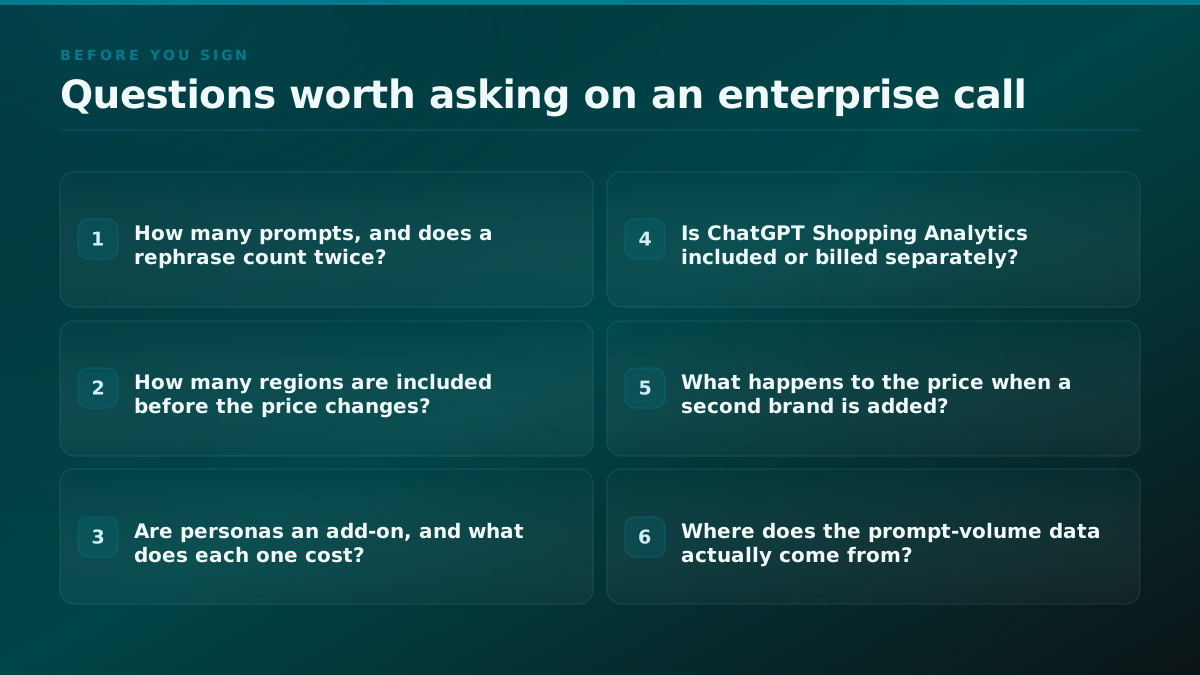
A separate r/SEO thread titled "Anyone using Profound and done due diligence?" surfaces the questions worth asking beyond the price itself, and it is worth reading in more detail than the checklist above can carry, because the exchange it contains is unusually direct for a vendor thread.
A commenter posting as u/WebLinkr, who describes running three separate reviews of Profound, opened with two specific claims: that Profound sources its data from a single provider and spent most of its Series A round acquiring it, and that the product only captures the first prompt in a conversation rather than the full exchange. A Profound team member, replying directly under u/Top_Gap_9251 and identifying himself as Nick from Profound, corrected both points on the record:
"I was literally in the room when our Series A money hit the bank account. We did not spend 'most of it' on acquiring that data. It was not cheap though... We have the entire conversation so we can see the full back and forth between the user and the AI models. We take all of this data and use it to build our prompt volumes product."
A second commenter, u/AbleInvestment2866, raised the coverage question from a different angle, arguing that any panel-based collection method (a browser plugin, specifically) structurally misses whatever it has no panelist running, which caps how complete a real-time prompt dataset can be no matter how the vendor markets it. Nick's reply again went further than a generic rebuttal:
"To be clear, we don't own any chrome extensions or plugins. We get this from multiple data providers that our data scientists then spent about 8 months working on to build the prompt volumes product. This is a very hard and expensive problem to solve."
When WebLinkr followed up asking exactly where those multiple providers source their data from, the thread ends without a fuller public answer, which is itself worth noting: a buyer doing real diligence on the data behind the score should expect that same question to be answerable on a call, even where it is understandably not laid out in a Reddit comment.
None of this is a reason to distrust the published Starter and Growth prices, which are simply what they say they are. It is a reason to ask the same questions on an Enterprise call that this Reddit thread asked in public: how many prompts, across how many regions, with or without personas, with or without Shopping Analytics, and where does the underlying prompt-volume data actually come from. A vendor with a direct, specific answer to all of those, the way Profound's own team answered in both threads cited here, has done real work to earn the number it eventually quotes.
From the field
A "custom" tier is a normal SaaS pattern, not a Profound-specific one
Gating the top tier behind a sales call is standard practice across the AI-visibility category and SaaS broadly; the reason a vendor gives (avoiding anchoring a buyer to the wrong number before scoping the account) is a real sales-process concern, not evasiveness for its own sake. What is unusual here is that even the FLOOR of that custom tier is undisclosed anywhere on the vendor's own surfaces, and the only public data point comes from a third-party practitioner's own reporting rather than the vendor.
What the price actually buys
A number on an invoice tells you what you paid. It does not tell you what fraction of your buyers' actual questions the tool is even sampling, and that second question is the one worth asking before the first.
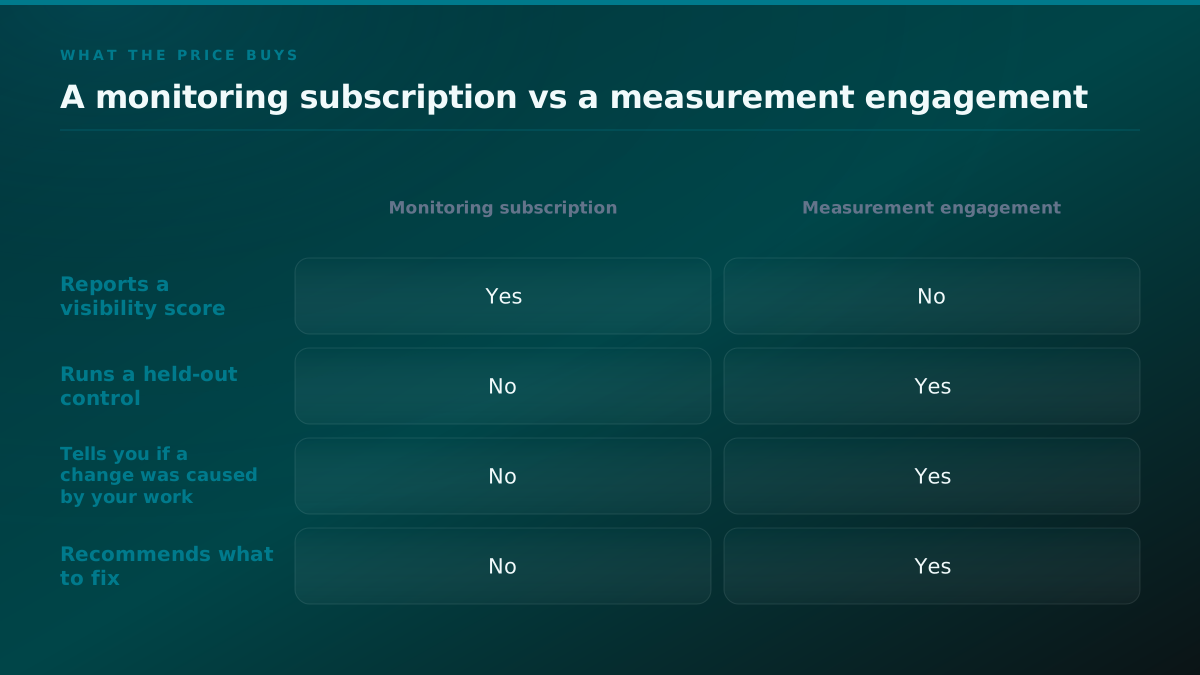
Whichever tier a buyer lands on, Starter, Growth, or a custom Enterprise deal, the number on that invoice buys a score: a count of how often a brand shows up across the tracked engines, tracked on the schedule the tier allows. It does not buy proof that a rising score was caused by anything the buyer's own team did, because a single reading has no comparison point built into it. That is a property of a monitoring subscription generally, not a Profound-specific gap, and it is the reason our own step-zero measurement run exists as a separate, published result: 12 money queries, 5 identical repeats each, one model, one day, and 7 of the 12 queries flipped outcome between identical repeats. A subscription at any of Profound's tiers reports that same kind of number on its own schedule. Turning it into proof of causation needs a held-out control run alongside it, which is a different kind of engagement than a monitoring subscription, at any price, is built to be.
Why engine count is the real lever, not just the sticker price
It is worth pausing on WHY the jump from one tracked engine to three, and then to up to nine, is the actual product being sold across these tiers, because the sticker price alone understates how much this matters. ChatGPT is the largest single AI answer surface by usage, which is why Starter tracks it alone and still has a real audience, but it is not the only surface a real buyer's prospects are asking questions in. Claude, Gemini, and Perplexity each carry meaningfully different citation behavior from ChatGPT and from each other, a model can cite a brand consistently in one system and never in another for reasons that have nothing to do with the brand's actual quality, purely differences in each system's own retrieval and ranking layer. A team measuring only ChatGPT and reporting that number as "our AI visibility" is making a claim its own data cannot support, the same structural gap this post opened with regarding a single reading having no comparison point, applied here to engine coverage instead of time.
This is also where Growth's 399 USD price starts to look less like "double Starter's prompt count" and more like the tier where the product actually becomes usable for its stated purpose. Three engines is still not complete coverage, Perplexity and other emerging answer surfaces sit outside even Growth's declared coverage per the published feature list, but it moves a buyer from measuring a fraction of their real AI-search footprint to measuring a majority of it. Enterprise's up-to-9-engines ceiling is the tier built for a team that has decided engine-by-engine gaps are themselves a risk worth pricing out, which is consistent with the per-brand-per-country pricing structure discussed above: a company running that kind of program has already decided monitoring completeness matters enough to pay a premium for it, not just a nice-to-have.
Who is actually asking this question
The buyers behind this search are not a single profile. Some are developer-tool and API companies sizing up answer engine optimization for the first time and trying to understand what a monitoring line item costs before they even get to the harder question of what moves the number. Reddit's own evidence in this thread skews toward exactly that audience: teams comparing the questions developer-tool buyers actually ask AI against what a tool like Profound can show them, rather than teams that have already committed budget and are simply confirming a renewal price. Others are further along, already running a monitoring subscription at Starter or Growth and hitting the ceiling on prompts, engines, or seats, which is the point where the Enterprise question stops being hypothetical.
What all of them share is the same structural problem this post opens with: the published numbers answer the easy half of the question, and the current top-10 SERP does not answer the harder half. A team weighing Reddit and community marketing alongside AI-citation work faces the identical version of this problem across every vendor in the category, not just Profound, because "custom, call sales" is the industry default for any tier past the self-serve ceiling.
What a team should actually compare before choosing a tier
Boiling the whole decision down: a buyer should compare tiers on three axes, not one. The obvious axis is price, 99 USD versus 399 USD versus a custom number that this post has now put a real anchor on. The second axis is engine coverage, covered above, which determines whether the number a tier reports is measuring most of a buyer's real AI-search footprint or a fraction of it. The third, and the one most pricing comparisons skip entirely, is prompt depth relative to the buyer's actual query set: 50 or 100 tracked prompts is either generous or nowhere close to enough depending on how many distinct buyer questions a company's category actually generates, and that number is specific to each buyer, not something Profound's tiers or this post can size for a reader in the abstract. A team that undercounts its own real prompt volume against either self-serve tier will hit the ceiling faster than the sticker price implies, and discover the Enterprise conversation earlier than it expected to.
What citon does differently on price
We do not publish a rate card either, and it is worth being direct about why, given the entire argument above is that a hidden number is worth scrutinizing. Citon's own pricing is scoped per engagement because the work itself is scoped per engagement, a held-out-control measurement design sized to a buyer's actual query set and category, not a seat count or a prompt cap that applies uniformly across every customer. That is a structurally different reason than a SaaS vendor avoiding an anchor number on a self-serve tier, and we say so rather than letting the parallel go unstated. What we do commit to publicly is the full body of measurement research behind that pricing, the same step-zero run and permutation test cited throughout this post, published with real numbers rather than asserted as a black box. The broader AI-citations research this sits inside follows the same rule: every claim in it is either sourced to a citation outside this site or labeled as our own measurement, and the distinction is never left for the reader to guess at.
Why this page needs a re-check, not just a re-read
Pricing pages drift faster than most other content a vendor publishes, and this one carries a real, dated warning rather than a generic one: the exact numbers cited here, 99 USD and 399 USD for the self-serve tiers, and the 1,000 USD per brand per country reported floor for Enterprise, were pulled and quoted on 2026-08-19. A vendor in an actively consolidating category, and AI-visibility tooling is exactly that right now, changes tier structure and pricing on a shorter cycle than a typical SaaS product in a settled market. Treat the two published numbers as current as of the date on this post and verify them directly against tryprofound.com/pricing before budgeting against them for a deal that closes months from now. The Enterprise anchor is even more time-sensitive, since it came from one practitioner's own reported experience rather than a published rate card, and a category this young can move that number in either direction inside a single fiscal year.
How this post was actually researched
Given that the entire argument above is about trusting a number and knowing where it came from, the same discipline applies to this post's own sourcing, stated plainly rather than left implicit. The two published prices, 99 USD and 399, USD came from a direct, live pull of Profound's own pricing page on the date in this post's byline, not a screenshot or a cached copy that could have drifted. The Enterprise anchor came from reading the full public comment thread on Reddit, both replies from Profound's own team member and the practitioner's reply that named the 1,000 USD per brand per country figure, rather than a secondhand summary of that thread written by someone else. The due-diligence material came from a second, separate Reddit thread, read in full including the parts where a commenter's claim gets corrected on the record. The independent pricing-bracket corroboration came from a live search of public posts naming Profound by name in a pricing context, not a keyword-matched guess at what an unrelated post might be about.
None of that is exotic. It is the ordinary baseline for a claim that names a real number about a real company, and it is worth stating here because the gap this post identifies, vendor content marketing restating two numbers without checking either one, is itself a sourcing failure of exactly this kind. A post that repeats "99 USD and 399 USD" without visiting the pricing page that day, or that repeats "around 1,000 USD a month" without reading who said it and in what context, has the same shape as the problem it would be describing.
What would change the numbers in this post
Stated plainly, in advance, rather than left for a reader to guess at: three things would meaningfully change what is written here. Profound publishing an actual Enterprise rate card would replace the reported-floor estimate with a real number, which is the single biggest open gap this post identifies and the one worth checking for directly on a future visit to the pricing page. A material change to Starter or Growth's published price or feature set would date the tier-comparison table above, which is why this post names its own pull date rather than presenting the numbers as timeless. And a second, independent practitioner report on Enterprise pricing that contradicts the 1,000 USD per brand per country floor, either higher or lower, would be worth weighing against the one cited here, since a single reported data point is never as strong as two that agree. None of those three things have happened as of this post's publish date, and the numbers above reflect that.
The honest summary
Starter costs 99 USD a month for one engine and 50 prompts. Growth costs 399 USD a month for three engines and 100 prompts. Enterprise has no public number, but the closest real anchor available, a named practitioner's own reporting, puts the historical floor near 1,000 USD a month per brand per country, likely 4,000 to 5,000 USD a month for a realistic multi-region deployment once that floor is applied honestly. None of the seven vendor-content pages currently ranking for this exact question puts a number on that gap. This post does, with the sourcing shown throughout, and the one place we extrapolated beyond a published figure is labeled as exactly that, not folded quietly into the rest of the numbers as if it carried the same certainty.
The underlying lesson generalizes past this one vendor. Any AI-visibility or AEO tool with a gated top tier will produce the same shape of gap: two real numbers on a pricing page, and a third figure that only shows up secondhand, in a Reddit thread, a Slack channel, or a sales call transcript nobody publishes. Reading the published tiers correctly, understanding what each one actually gates rather than just what it costs, and treating a reported Enterprise floor as an anchor rather than a quote, is the same discipline worth applying to the next vendor's pricing page, not just this one.
Sources
Every number above, and where it came from. A figure without a row here is one we should not have printed.
- Profound, official pricing page
- Starter 99 USD a month (billed yearly, 2 months free), Growth 399 USD a month (billed yearly), Enterprise custom/tailored. Pulled live, 2026-08-19.
- r/aeo, "Does anyone here know the pricing for enterprise plan of profound"
- A Profound team member (u/nick-profound) confirms in-thread that enterprise pricing depends on prompt volume, region count, personas, and ChatGPT Shopping Analytics, and confirms the 99 USD a month self-serve floor.
- u/maltelandwehr, same r/aeo thread
- "It used to start at USD 1,000 per month per brand per country. Average cost is probably significantly higher." A named, credentialed SEO/AEO practitioner's direct answer to the pricing question.
- r/SEO, "Anyone using Profound and done due diligence?"
- A buyer describes running 3 separate reviews of Profound and raises a data-provenance question the vendor's own team addresses in-thread.
- @VictorIjidola on X
- An independent SEO/AEO tool builder, unconnected to Profound, citing "the 399 USD a month Rankr's competitors charge" and "the most popular aeo tools cost 99 USD a month for basic features" as the category's own pricing bracket.
- G2, Profound reviews
- The one review-aggregator result inside the current top 10 for "profound pricing." Star ratings and user reviews, no independent pricing breakdown.
- HubSpot, "HubSpot AEO vs. Profound"
- A separate vendor's own comparison piece, cited here for how a different company frames Profound's category and use case, not for a pricing figure.
- Our own step-zero measurement run
- 12 money queries times 5 identical repeats, one model, one day, 60 of 60 calls succeeded, 7 of 12 flipped outcome between identical repeats. Published with its numbers on this site.
Questions this answers
- How much does Profound cost per month?
- Starter is 99 USD a month billed yearly, for 50 prompts tracked on ChatGPT only with one seat and no API access. Growth is 399 USD a month billed yearly, for 100 prompts across 3 answer engines with 3 seats and CSV/JSON exports. Enterprise has no public price on Profound's own pricing page.
- How much does Profound's Enterprise tier cost?
- Profound does not publish an Enterprise number on its own pricing page. A named SEO and AEO practitioner reported on Reddit that it used to start near 1,000 USD a month per brand per country, with the average deal running higher, and a Profound team member's public reply in the same thread did not dispute that figure.
- What does "prompts tracked" actually limit on Profound?
- A prompt is one exact wording asked against one tracked answer engine, per Profound's own pricing page. A rephrase of the same question counts as a second prompt against the cap, and running the same prompt set under a different persona or in a second region adds to the tracked count separately, per Profound's own team.
- Does Profound's Starter or Growth plan include ChatGPT Shopping data?
- No. Per Profound's own published pricing page, ChatGPT Shopping Analytics is excluded from both the Starter and Growth self-serve tiers entirely and is only included once a buyer moves to a custom Enterprise agreement, alongside API access and SSO/SOC2 compliance.
- Why won't Profound give a number for Enterprise pricing up front?
- A Profound team member explained directly on Reddit that quoting a number before scoping the account risks anchoring the buyer to an incorrect price, since the real figure depends on prompt volume, region count, whether personas are added, and whether ChatGPT Shopping Analytics is included in the deal.
- Is Profound's pricing comparable to other AI-visibility tools?
- An independent AEO-tool builder with no relationship to Profound has separately cited the same 99 to 399 USD monthly bracket as the AI- visibility category's typical self-serve range on a public post, which corroborates Profound's own published numbers rather than undercutting them.
Keep reading
Measurement
Best AI Visibility Tools (and Where a Tool Alone Runs Out)
Seven AI-visibility tools compared on what they actually measure and what they cost, plus the one question none of them can answer on their own.
24 min read
Measurement
Prompt Tracking, How Many Prompts and How Many Repeats Before a Change Is Real
Every page ranking for prompt tracking says how to pick prompts. None says how many, or how many repeats, before a weekly change stops being noise.
44 min read
Measurement
How to Track AI Visibility, and How to Read What It Tells You
The trackers solved collection and left interpretation alone. The record schema, the sampling trade, the null distribution, and whether your design could see a win.
41 min read